


PandaHomeMart
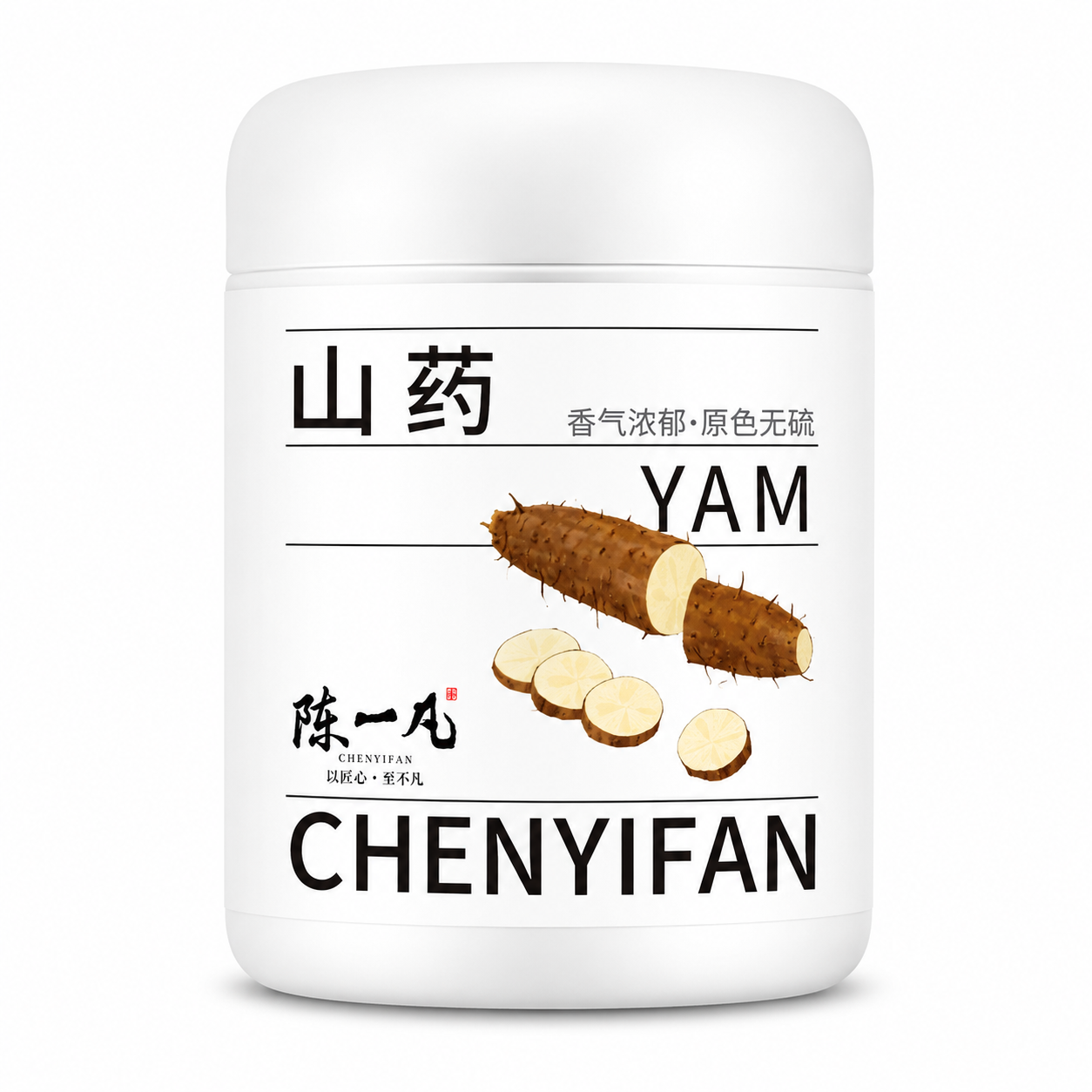
Chinese Yam Granules (Shan Yao) – 220 g
Chinese Yam Granules (Shan Yao) – 220 g
Couldn't load pickup availability
Chinese Yam Granules (Shan Yao) — 220 g
Pale ivory granules. Mild, starchy root character. A convenient traditional ingredient for comforting everyday cooking.
Discover Chinese Yam Granules (Shan Yao Ke Li / 山药颗粒), dried Chinese yam presented in a convenient small-piece format for easy measuring, portioning and everyday recipe preparation.
Mild, gently earthy and starchy, Chinese yam works naturally alongside rice, grains, beans and seeds without overpowering the finished dish.
Each package contains 220 g / 7.76 oz of Chinese Yam Granules, a practical format for congee, grain porridges, soups, mixed-grain preparations and suitable traditional-inspired recipes.
Why You’ll Appreciate Them
-
Real Chinese yam — dried Shan Yao presented in convenient small pieces
-
Easy-to-measure granules — simple to portion and distribute throughout recipes
-
Mild root character — gently earthy, starchy and mellow
-
Made for comforting dishes — ideal for congee, porridge and soups
-
Easy to combine — works alongside compatible rice, grains, beans and seeds
-
Practical 220 g size — suitable for repeated everyday cooking
Product at a Glance
-
Product: Chinese Yam Granules
-
Chinese name: 山药颗粒
-
Pinyin: Shan Yao Ke Li
-
Root name: Shan Yao / 山药
-
Also known as: Chinese yam granules · Dried Chinese yam pieces
-
Ingredient type: Traditional Chinese root
-
Format: Dried granules / small pieces
-
Net weight: 220 g / 7.76 oz
-
Appearance: Pale cream-to-ivory dried pieces
-
Flavour: Mild · Gently earthy · Starchy · Mellow
-
Category: Culinary pantry ingredient
-
Best for: Congee · Grain porridge · Soups · Mixed-grain preparations · Cooked recipes
-
Preparation: Prepare according to product-label or recipe directions
-
Format advantage: Easy to measure, portion and combine with compatible grains
-
Tea leaves: Contains no Camellia sinensis tea leaves
-
Tea classification: Primarily a culinary ingredient rather than conventional tea
Natural Chinese yam granules may vary slightly in size, shape and colour.
What Is Shan Yao / 山药?
Shan Yao / 山药 is the Chinese name commonly used for Chinese yam, a traditional root ingredient with a familiar role in Chinese cooking.
This product is specifically presented as:
Shan Yao Ke Li / 山药颗粒
which means:
Chinese Yam Granules
The distinction is useful:
Shan Yao / 山药 → Chinese Yam
Shan Yao Ke Li / 山药颗粒 → Chinese Yam Granules
Rather than larger dried slices, this product contains smaller pieces designed for convenient everyday cooking.
Taste & Character
Chinese Yam Granules offer a gentle culinary profile:
Mild · Gently Earthy · Starchy · Mellow
Their flavour is relatively understated and is not intended to dominate the finished dish.
This allows Shan Yao to work particularly well alongside rice, grains, beans, seeds and other ingredients that contribute to the broader flavour and texture of a recipe.
For someone beginning to explore traditional Chinese roots, its mild culinary character makes Chinese yam relatively approachable.
Why Choose Granules?
The biggest advantage of this product is convenience.
Compared with larger dried Chinese yam slices, granules are:
-
Smaller
-
Easier to measure
-
Easier to portion
-
Convenient to distribute through grain dishes
-
Easy to combine with rice and compatible grains
-
Particularly suited to congee and porridge-style preparations
For everyday cooking, this small-piece format makes Shan Yao especially practical.
How to Prepare
Chinese Yam Granules should be prepared according to the product-specific directions or an appropriate recipe.
A general preparation approach is:
-
Measure the desired amount according to the product label or recipe.
-
Rinse if directed on the packaging.
-
Soak if required by the product directions or recipe.
-
Add the granules to the appropriate cooking vessel.
-
Cook thoroughly according to the product or recipe directions.
-
Incorporate the properly prepared granules into the finished dish.
Because granules may cook differently from larger dried yam slices, use preparation guidance intended for this specific product format.
Do Chinese Yam Granules Need to Be Soaked?
Not necessarily.
The available product information does not specify that soaking is always required.
Soaking time, cooking time and water quantity can vary depending on whether you are preparing:
Congee · Grain Porridge · Soup · Mixed-Grain Dishes
Follow the product-label directions or the specific recipe being used rather than applying one universal preparation method.
Ways to Enjoy
Chinese Yam Congee
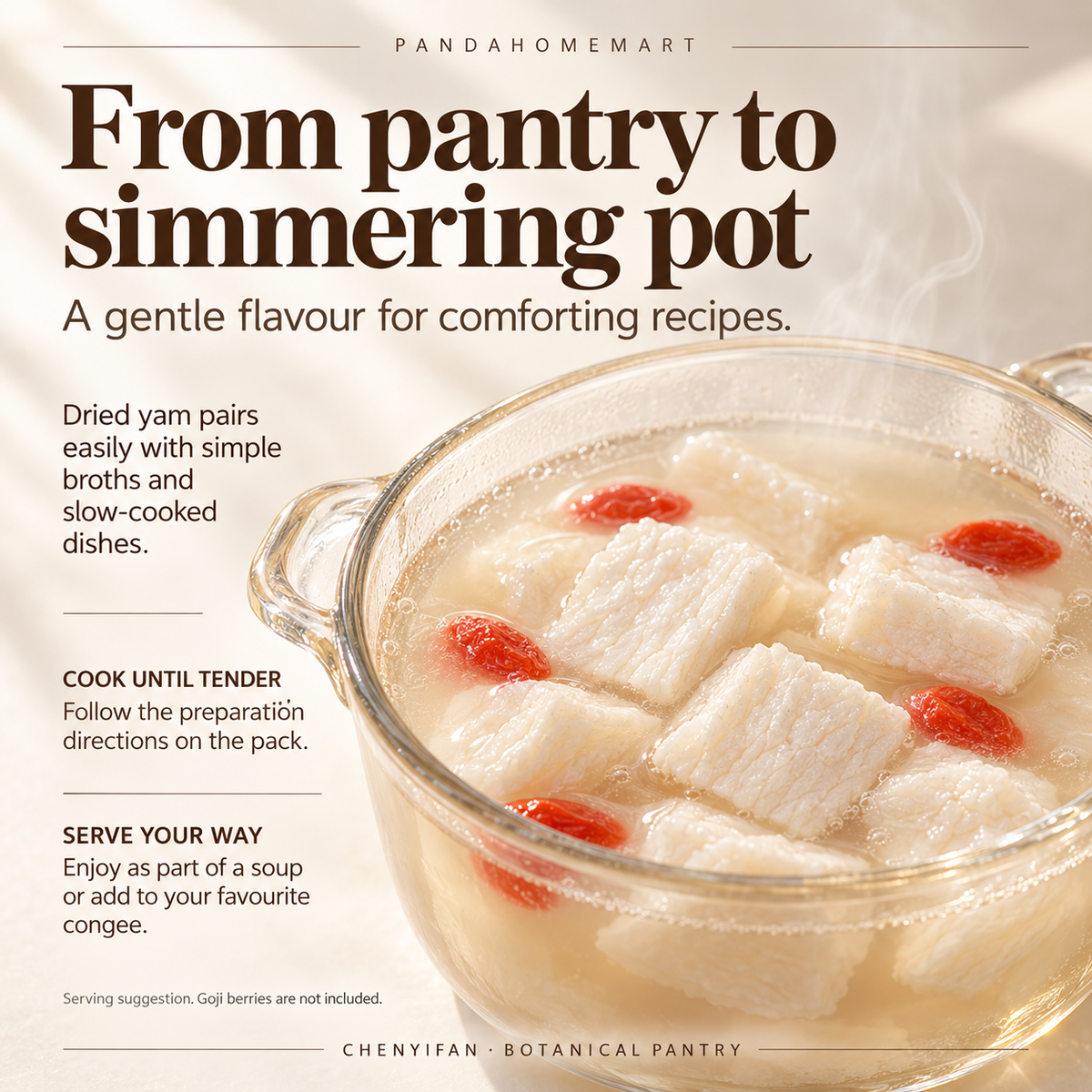
Add Chinese Yam Granules to an appropriate rice or mixed-grain congee recipe.
Their mild root character works naturally alongside the soft texture of cooked grains.
Chinese Yam Porridge
Explore Shan Yao with compatible grains for a warm traditional-inspired grain porridge.
Chinese Yam Soup
The granules may be incorporated into suitable cooked soup recipes alongside compatible ingredients.
Mixed-Grain Preparations
The smaller format makes Chinese Yam Granules particularly convenient for combining with suitable grains, beans and seeds.
Traditional-Inspired Cooked Recipes
Shan Yao may also become part of more complex cooked preparations when used according to an appropriate recipe.
Best Ingredients to Pair with Chinese Yam
Chinese Yam + Rice
Mild root + familiar grain
Rice provides a natural foundation for appropriate Shan Yao congee and porridge recipes.
Chinese Yam + Black Rice
Pale yam + deep-coloured grain
Black Rice adds visual contrast and a different grain character to suitable preparations.
Chinese Yam + Coix Seeds
Mild root + plump ivory kernels
Two gentle pantry ingredients for appropriate congee, porridge and mixed-grain recipes.
Chinese Yam + Small Red Beans
Pale granules + deep red beans
Small Red Beans add colour and a softer bean texture to suitable multi-ingredient preparations.
Chinese Yam + Gorgon Seeds
Gorgon Seeds add another traditional seed texture to suitable soup, congee and porridge recipes.
Chinese Yam + Lotus Seeds
Lotus Seeds may appear alongside Shan Yao in appropriate traditional-inspired cooked preparations.
Chinese Yam + Red Jujube
Red Jujube adds mellow dried-fruit character to suitable congee, porridge and soup recipes.
Different roots, grains, beans and seeds can require different cooking times, so follow a recipe appropriate to the complete combination.
Chinese Yam Granules vs. Chinese Yam Slices
Both products come from Chinese yam, but their physical formats create different preparation experiences.
| Chinese Yam Granules | Chinese Yam Slices | |
|---|---|---|
| Chinese Name | 山药颗粒 | 山药片 |
| Format | Small granules / pieces | Larger slices |
| Portioning | Easy to measure | Individual slices |
| Best for | Congee · Porridge · Soups · Grain dishes | Soups · Traditional recipes |
| Convenience | High | Traditional sliced format |
| Base Ingredient | Chinese Yam | Chinese Yam |
Choose granules when easy measuring, mixing and everyday grain-based cooking are priorities.
Choose slices when a recipe or presentation specifically calls for larger dried yam pieces.
Chinese Yam vs. Sweet Potato
Chinese Yam and Sweet Potato are different root ingredients.
| Chinese Yam / Shan Yao | Sweet Potato | |
|---|---|---|
| Ingredient | Chinese yam root | Sweet potato |
| Flavour | Mild, earthy and starchy | Generally sweeter |
| Product Form Here | Dried granules | Product-specific |
| Culinary Character | Mild root ingredient | Sweeter starchy root |
| Interchangeable? | No | No |
Chinese Yam should not be treated as Sweet Potato simply because both are starchy root ingredients.
Chinese Yam vs. Mai Dong
Chinese Yam / Shan Yao and Mai Dong are completely different traditional ingredients.
| Chinese Yam / Shan Yao | Mai Dong | |
|---|---|---|
| Chinese Name | 山药 | 麦冬 |
| Form | Granules / small dried pieces | Whole spindle-shaped tubers |
| Character | Mild, earthy and starchy | Mild, subtly sweet and botanical |
| Primary Role | Culinary pantry ingredient | Botanical root ingredient |
| Best for | Congee · Porridge · Soups | Product-specific botanical preparations |
| Same Ingredient? | No | No |
For PandaHomeMart, Shan Yao should be positioned primarily around culinary use, while Mai Dong belongs more clearly within the botanical-root category.
A Gentle Addition to the Traditional Pantry
Chinese Yam Granules fit naturally alongside:
Coix Seeds · Gorgon Seeds · Lotus Seeds · Black Rice · Small Red Beans · Rice · Millet · Traditional Roots & Grains
Within a varied pantry:
Black Rice → Dark grain · Rice bowls & congee
Coix Seeds → Ivory kernels · Congee & soup
Gorgon Seeds → Compact seeds · Soup & porridge
Chinese Yam Granules → Pale ivory · Mild & starchy · Congee + porridge + soup
This gives Shan Yao a clear role as a convenient traditional root ingredient for comforting everyday cooking.
Storage & Care
Keep the package securely closed in a cool, dry place away from moisture, excessive humidity, direct sunlight, heat and strong odours.
Use clean, dry utensils when handling the granules.
Refer to the product packaging for best-before information and any additional storage or preparation directions.
Product Guidance
Chinese Yam Granules are primarily a culinary pantry ingredient intended for appropriate cooked preparations.
Follow the preparation directions provided on the product packaging or an appropriate recipe.
If you have food allergies, dietary concerns or questions about whether the ingredient is appropriate for you, review the final product label and consult an appropriate qualified professional when necessary.
Frequently Asked Questions
What are Chinese Yam Granules?
Chinese Yam Granules / Shan Yao Ke Li / 山药颗粒 are dried Chinese yam presented in small pieces for convenient cooking.
What is Shan Yao?
Shan Yao / 山药 is the Chinese name commonly used for Chinese yam.
This product is a granulated form of that root ingredient.
What does Shan Yao Ke Li mean?
Shan Yao Ke Li / 山药颗粒 means Chinese Yam Granules or granulated Chinese yam.
How much is included?
Each package contains 220 g / 7.76 oz of Chinese Yam Granules.
What do Chinese Yam Granules taste like?
They generally have a mild, gently earthy, starchy and mellow character.
Are Chinese Yam Granules sweet?
They are characterized more by mild, earthy and starchy notes than pronounced sweetness.
Are Chinese Yam Granules the same as Chinese Yam Slices?
They come from the same base ingredient but are different physical formats.
Granules are smaller and easier to measure and combine with grains, while slices are larger individual pieces.
Why choose granules instead of slices?
The smaller format makes Chinese Yam easier to measure, portion and distribute through congee, porridge and mixed-grain recipes.
Do Chinese Yam Granules need to be soaked?
Not always.
Follow the product directions or recipe being used.
How long do Chinese Yam Granules take to cook?
Cooking time depends on the product and preparation.
Use directions intended specifically for the granulated format rather than assuming the same cooking time as larger dried yam slices.
Can Chinese Yam Granules be used in congee?
Yes. They may be incorporated into appropriate rice or mixed-grain congee recipes.
Can they be used in porridge?
Yes. Shan Yao Granules work naturally in suitable grain-porridge preparations.
Can Shan Yao be used in soup?
Yes. Chinese Yam Granules may be incorporated into appropriate cooked soup recipes.
Can Chinese Yam be combined with Coix Seeds or Gorgon Seeds?
Yes, in suitable recipes.
Because the ingredients may have different preparation requirements, follow cooking guidance intended for the complete combination.
Is Chinese Yam the same as Sweet Potato?
No. They are different root ingredients and should not automatically be treated as interchangeable.
Is Chinese Yam the same as Mai Dong?
No.
Shan Yao / 山药 and Mai Dong / 麦冬 are different ingredients with different forms and culinary roles.
Is this a tea?
No.
Chinese Yam Granules are better understood as a traditional root and culinary pantry ingredient, with their strongest uses being congee, porridge, soups and mixed-grain dishes.
Who are Chinese Yam Granules best for?
They are especially suited to home cooks, congee and porridge enthusiasts and people exploring traditional Chinese roots, grains and everyday pantry ingredients.
Bring a Gentle Root to Everyday Cooking
Pale ivory granules. Mild, starchy root character. From comforting congee to warm soups and grain porridges.
Add Shan Yao to rice congee, explore it alongside compatible grains in porridge, incorporate it into soup, or combine it with Coix Seeds, Small Red Beans or Gorgon Seeds in an appropriate recipe.
Add Chinese Yam Granules (Shan Yao) — 220 g to your pantry and bring a mild, versatile traditional root into everyday cooking.
Bring Eastern Living Home.
Share




Complete Your Tea Ritual


