


PandaHomeMart
Dandelion Root (Pu Gong Ying Gen) – 250 g
Dandelion Root (Pu Gong Ying Gen) – 250 g
Couldn't load pickup availability
Dandelion Root (Pu Gong Ying Gen) — 250 g
Earthy root character. Mild natural bitterness. A deeper botanical ingredient for carefully prepared infusions and everyday rituals.
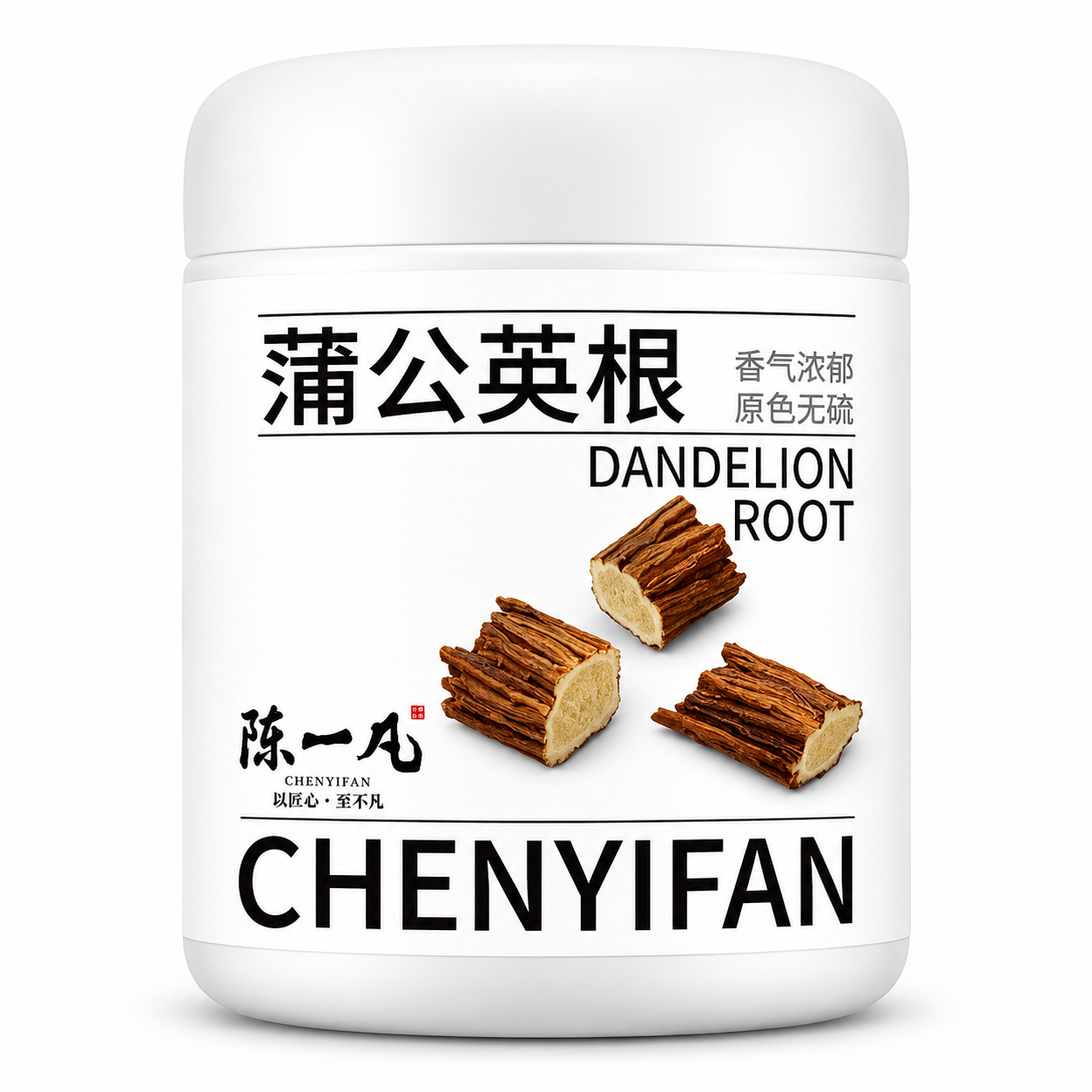
Discover Dandelion Root (Pu Gong Ying Gen / 蒲公英根), dried cut root pieces with naturally textured brown exteriors, pale tan-to-golden centres and visible root fibres.
With its earthy aroma, mild natural bitterness and gently toasty character, Dandelion Root offers a deeper sensory experience than delicate flowers, sweet dried fruits or milder botanical roots.
Each container includes 250 g / 8.82 oz of dried Dandelion Root, a substantial format for exploring root-based botanical preparations and appropriate ingredient pairings.
Depending on preparation, Dandelion Root may produce a warm golden-amber to deeper-amber infusion.
Why You’ll Appreciate It
-
Real dried root pieces — visible cut root rather than powder or a premixed blend
-
Deep earthy character — root-like, robust and mildly bitter
-
Gently toasty notes — a warm sensory direction without claiming roasted processing
-
Warm amber infusion — colour may range from golden amber to deeper amber
-
Distinct from Dandelion Leaf — this product contains the root portion
-
Substantial 250 g size — ideal for repeated botanical-root exploration
Product at a Glance
-
Product: Dandelion Root
-
Chinese name: 蒲公英根
-
Pinyin: Pu Gong Ying Gen
-
Also known as: Dried Dandelion Root · Dandelion Root Herb
-
Common botanical association: Taraxacum officinale
-
Format: Dried cut root pieces
-
Net weight: 250 g / 8.82 oz
-
Appearance: Brown textured exterior with pale tan-to-golden centres
-
Flavour: Earthy · Root-like · Mildly bitter · Gently toasty · Robust
-
Infusion character: Golden amber to deeper amber
-
Category: Botanical root
-
Best for: Root-based botanical preparations · Appropriate pairings
-
Preparation: Follow product-specific serving and preparation directions
-
Packaging: Storage container
-
Tea leaves: Contains no Camellia sinensis tea leaves
-
Important: Dandelion Root is different from Dandelion Leaf
-
Processing note: Gently toasty describes the sensory character; roasted processing is not confirmed
Exact botanical species identification should ultimately follow the supplier documentation and final product label.
Natural dried root pieces may vary slightly in size, shape, colour and texture.
What Is Dandelion Root?
Dandelion Root / 蒲公英根 is the root portion of the dandelion plant, dried and cut into pieces for botanical preparations.
The Chinese name can be understood simply:
Pu Gong Ying / 蒲公英 = Dandelion
Gen / 根 = Root
So:
Pu Gong Ying Gen / 蒲公英根 = Dandelion Root
Dandelion is commonly associated with the botanical name Taraxacum officinale. However, the exact species identity of this specific commercial product should follow supplier documentation and product labelling.
For clear product identification:
Dandelion Root · Pu Gong Ying Gen · 蒲公英根
are the primary product names.
Taste & Character
Dandelion Root sits on the deeper side of the botanical pantry:
Earthy · Root-Like · Mildly Bitter · Gently Toasty · Robust
It is not a sweet botanical ingredient.
Its mild natural bitterness forms part of a broader earthy and root-forward sensory profile rather than being the only flavour characteristic.
Compared with other pantry ingredients:
Red Jujube → Mellow & gently sweet
Mai Dong → Mild & delicate
Ginger → Warm & spicy
Dandelion Root → Earthy · Mildly bitter · Robust
For someone who enjoys deeper botanical flavours rather than sweet, fruity or floral profiles, Dandelion Root offers a clearly different direction.
Is This Roasted Dandelion Root?
The available product information does not confirm that this product has been roasted.
Its flavour is described as:
Gently Toasty
This describes the sensory character of the root and should not be interpreted as confirmation of a roasting process.
For exact processing information, refer to the final product packaging or supplier documentation.
How to Prepare
Dandelion Root is a botanical root rather than conventional loose-leaf tea, so preparation should follow the product-specific directions.
1 · Check the Label
Read the serving amount and preparation directions provided on the product packaging.
2 · Measure
Use the recommended quantity for this specific product.
3 · Prepare
Rinse or otherwise prepare the root if directed.
4 · Add Water
Use the amount of fresh drinking water specified for the product or recipe.
5 · Prepare as Directed
Follow the recommended preparation method and duration.
6 · Strain if Appropriate
Strain according to the preparation method being used.
Do not automatically apply conventional green-tea, black-tea or other loose-leaf tea brewing parameters.
A Root-Based Botanical Infusion
Depending on preparation, Dandelion Root may produce:
A Warm Golden-to-Deep Amber Cup
with:
Earthy Aroma + Mild Bitterness + Gently Toasty Root Character
The exact colour and intensity may vary according to the amount used, water volume, temperature, preparation time and natural variation in the root pieces.
Colour intensity alone should not be used as a measure of preparation quality.
Is Dandelion Root Tea Actually Tea?
Not technically.
Traditional:
Green Tea · White Tea · Oolong · Black Tea · Pu-erh
comes from Camellia sinensis.
Dandelion Root comes from the root of the dandelion plant.
When prepared in water, it is more accurately described as a:
Root-Based Botanical Infusion
However, Dandelion Root Tea is a common consumer search phrase and can help shoppers identify this type of preparation.
Dandelion Root vs. Dandelion Leaf
Dandelion Root and Dandelion Leaf come from different parts of the plant and offer different sensory experiences.
| Dandelion Root | Dandelion Leaf | |
|---|---|---|
| Plant Part | Root | Leaf |
| Format | Dried root pieces | Dried leaves |
| Appearance | Brown / tan | Green |
| Character | Earthy, root-like, mildly bitter | Green and vegetal |
| Preparation Style | Root-based botanical | Leaf-based botanical |
| Same Product? | No | No |
Choose Dandelion Root when you prefer deeper earthy character, mild natural bitterness and root-forward flavour.
Choose Dandelion Leaf when a recipe or preparation specifically calls for the leaf portion.
The two should not be treated as interchangeable.
Dandelion Root vs. Ginger
Both belong naturally in a botanical-root pantry, but their sensory profiles are very different.
| Dandelion Root | Ginger | |
|---|---|---|
| Main Character | Earthy · Mildly bitter · Gently toasty | Warm · Spicy · Pungent |
| Appearance | Brown/tan cut root | Pale golden fibrous root |
| Flavour Direction | Deeper & earthy | Brighter & spicy |
| Best Fit | Earthy botanical preparations | Infusions · Pairings · Cooking |
| Same Ingredient? | No | No |
Choose Dandelion Root for a deeper earthy flavour.
Choose Ginger when you want a warmer, spicier and more pungent character.
Dandelion Root vs. Mai Dong
These two roots offer almost opposite sensory directions.
Dandelion Root
Earthy · Mildly bitter · Robust · Gently toasty
Mai Dong / 麦冬
Mild · Delicate · Subtly sweet · Pale spindle-shaped tubers
They are different botanical-root ingredients and should not be treated as interchangeable.
Best Pairing Directions
Dandelion Root + Ginger
Earthy root + warm spice
Ginger adds aromatic warmth to Dandelion Root's deeper flavour profile.
Dandelion Root + Chen Pi
Deep root + aromatic dried citrus
Chen Pi adds a citrus dimension alongside Dandelion Root's earthy character.
Dandelion Root + Red Jujube
Mild bitterness + mellow fruit sweetness
Red Jujube provides a softer dried-fruit contrast.
Dandelion Root + Black Tea
Earthy root + fuller tea body
Black Tea creates a deeper tea-and-root direction in an appropriate preparation.
Always follow preparation guidance suitable for every ingredient being combined.
A Deeper Addition to the Botanical Root Pantry
Dandelion Root fits naturally alongside:
Ginger · Mai Dong · Danshen · Dang Gui · Astragalus · Polygonatum · Black Maca · Tai Zi Shen
Within a varied botanical-root pantry:
Ginger → Warm · Spicy · Pungent
Danshen → Rust-red · Bitter · Earthy
Dang Gui → Aromatic · Earthy
Mai Dong → Pale · Delicate
Tai Zi Shen → Mild · Subtly sweet
Dandelion Root → Earthy · Mildly bitter · Gently toasty · Robust
This gives Dandelion Root a clear role as the deeper earthy root choice for people exploring robust botanical flavours.
Storage & Care
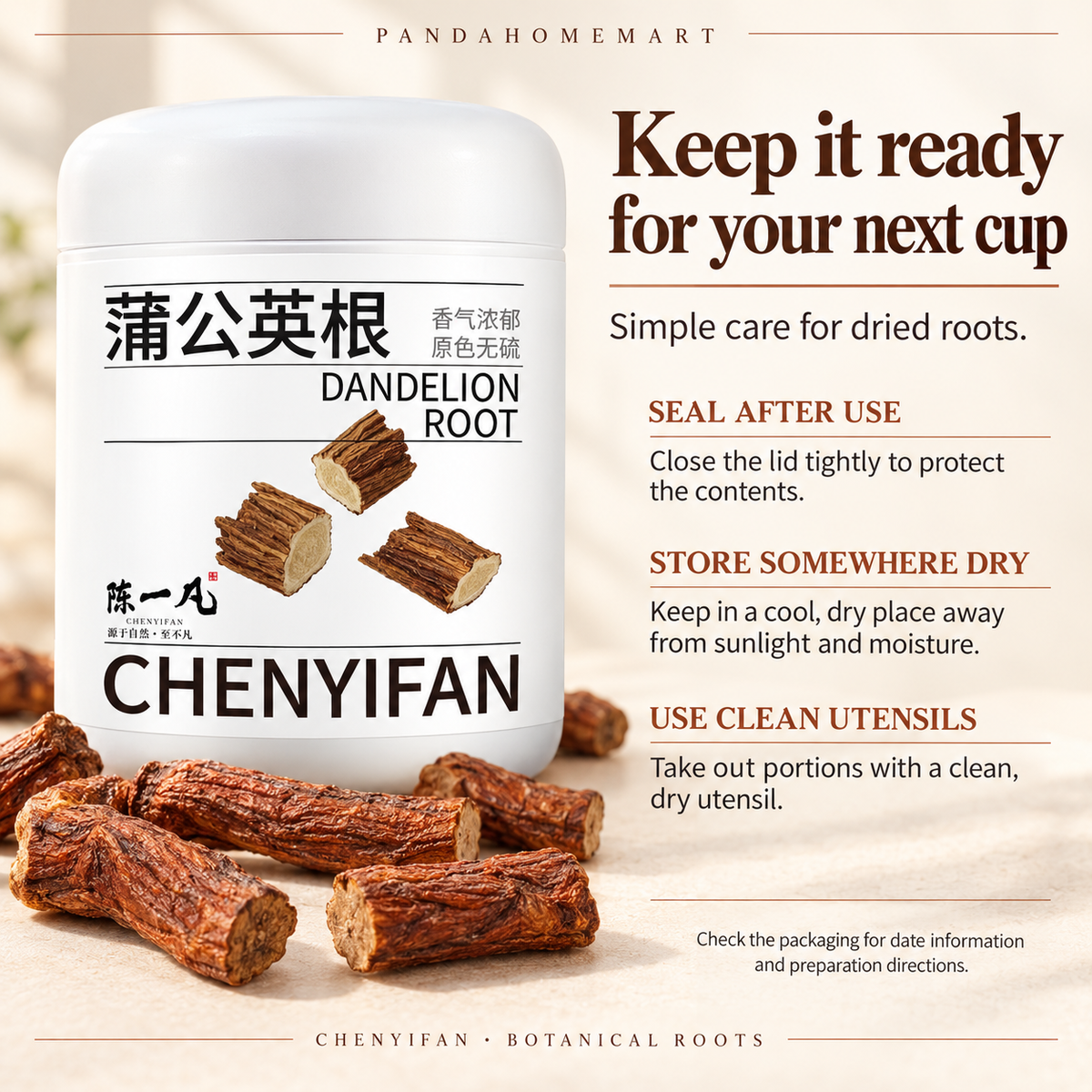
Keep the container securely closed in a cool, dry place away from moisture, excessive humidity, direct sunlight, heat and strong odours.
Use clean, dry utensils when handling the root pieces and reseal the container promptly after use.
Refer to the product packaging for best-before information and any additional storage, serving or preparation directions.
Product Guidance
Dandelion Root is a botanical ingredient rather than conventional tea.
Always:
-
Follow the serving amount provided on the product label
-
Follow product-specific preparation directions
-
Follow warnings and usage information printed on the packaging
-
Avoid treating Dandelion Root and Dandelion Leaf as interchangeable
-
Use an appropriate recipe when combining Dandelion Root with other ingredients
If you take medication, have a medical condition, have allergies or dietary concerns, are pregnant or breastfeeding, or are unsure whether Dandelion Root is appropriate for you, consult a qualified healthcare professional before use.
This product is not intended to diagnose, treat, cure or prevent any disease.
Frequently Asked Questions
What is Dandelion Root?
Dandelion Root is the dried root portion of the dandelion plant, known in Chinese as Pu Gong Ying Gen / 蒲公英根.
What does Pu Gong Ying Gen mean?
Pu Gong Ying / 蒲公英 means dandelion and Gen / 根 means root.
Together, Pu Gong Ying Gen / 蒲公英根 means Dandelion Root.
How much is included?
Each container contains 250 g / 8.82 oz of dried cut Dandelion Root.
Is this definitely Taraxacum officinale?
Dandelion is commonly associated with Taraxacum officinale, but exact species identification for this commercial product should follow supplier documentation and product labelling.
What does Dandelion Root taste like?
It generally has an earthy, root-like, mildly bitter, gently toasty and robust character.
Is Dandelion Root bitter?
Yes, mildly.
The bitterness is part of its broader earthy and root-like sensory profile.
Is this roasted Dandelion Root?
Roasting is not confirmed by the available product information.
“Gently toasty” describes the sensory character and should not be interpreted as confirmation of roasted processing.
What colour is Dandelion Root infusion?
Depending on preparation, it may range from golden amber to deeper amber.
Is Dandelion Root the same as Dandelion Leaf?
No.
They are different parts of the plant with different appearances and sensory profiles.
Is Dandelion Root tea actually tea?
Not technically.
Dandelion Root is not Camellia sinensis. When prepared in water, it is more accurately described as a root-based botanical infusion.
Can Dandelion Root be brewed like loose-leaf tea?
Do not automatically use standard tea-brewing parameters.
Follow the serving amount, water quantity, preparation method and duration provided for the product.
Can Dandelion Root be simmered?
Follow the product-specific directions. If the label or an appropriate recipe specifies simmering, prepare it accordingly.
Can Dandelion Root be paired with Ginger?
Yes, in an appropriate recipe. Ginger provides warm aromatic spice alongside Dandelion Root's deeper earthy character.
Can Dandelion Root be paired with Chen Pi or Red Jujube?
Yes, in suitable preparations.
Chen Pi adds aromatic dried-citrus character, while Red Jujube provides mellow fruit sweetness.
Is Dandelion Root the same as Mai Dong?
No.
Dandelion Root is deeper, earthier and mildly bitter, while Mai Dong is milder, more delicate and subtly sweet.
Are these whole roots?
No. This product is presented as dried cut root pieces, rather than whole intact roots or powder.
Who is Dandelion Root best for?
It is especially suited to people exploring dried botanical roots, shoppers searching for Dandelion Root Tea ingredients and those who prefer earthy, mildly bitter and robust botanical flavours.
Discover the Earthy Side of the Botanical Pantry
Naturally textured roots. Warm amber character. Earthy flavour with mild bitterness and gently toasty depth.
Explore Dandelion Root according to the product directions, or pair it with compatible ingredients such as Ginger, Chen Pi, Red Jujube or Black Tea in an appropriate preparation.
Add Dandelion Root (Pu Gong Ying Gen) — 250 g to your botanical pantry and discover a deeper, earthier side of everyday botanical rituals.
Bring Eastern Living Home.
Share




Complete Your Tea Ritual


