


PandaHomeMart
Angelica Root Slices (Dang Gui) – 50 g
Angelica Root Slices (Dang Gui) – 50 g
Couldn't load pickup availability
Angelica Root Slices (Dang Gui)™ — 50 g
Distinctive aromatic root. Pale golden slices. A traditional Chinese botanical ingredient for carefully prepared soups and root-based recipes.
Discover Angelica Root Slices (Dang Gui / 当归)—dried slices of a traditional Chinese botanical root generally identified as Angelica sinensis.
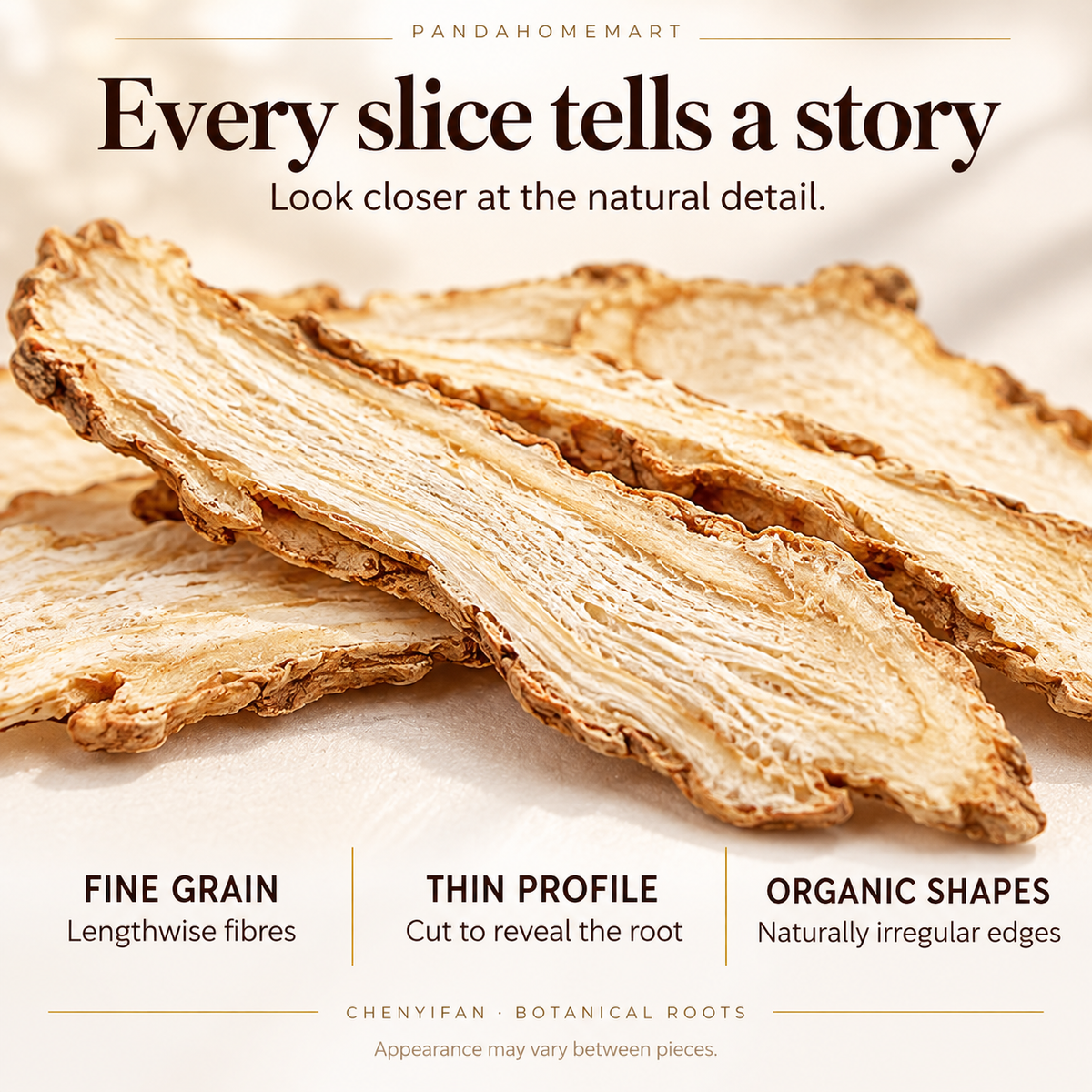
The slices reveal a pale cream-to-golden interior, naturally darker tan-to-brown edges and visible fibrous root structure. Their defining sensory character is unmistakably root-forward:
Aromatic · Earthy · Root-Like · Slightly Sweet · Gently Bitter
With 50 g / 1.76 oz of dried Dang Gui Root Slices, this compact format is particularly suited to recipe-specific use, traditional-inspired soups and focused botanical-root exploration.
Why You’ll Appreciate It
-
50 g / 1.76 oz — a compact format for recipe-specific preparation
-
Traditional botanical identity — Dang Gui / 当归, generally identified as Angelica sinensis
-
Visible sliced-root structure — pale interior, darker edges and natural fibrous grain
-
Distinctive aromatic character — one of the clearest sensory features of Dang Gui
-
Layered root flavour — earthy, slightly sweet and gently bitter
-
Soup-oriented versatility — particularly suited to appropriate traditional-inspired soup recipes
-
Whole-ingredient visibility — dried slices rather than powder or a premixed formula
-
Easy botanical identification — distinct from Ginseng, Danshen, Astragalus and Chinese Yam
Product at a Glance
-
Product: Angelica Root Slices (Dang Gui)™
-
Chinese name: 当归
-
Pinyin: Dang Gui
-
Also known as: Danggui · Chinese Angelica Root
-
Botanical name: Angelica sinensis
-
Form: Dried root slices
-
Net weight: 50 g / 1.76 oz
-
Appearance: Pale cream to golden slices with naturally darker tan-to-brown edges
-
Flavour: Aromatic · Earthy · Root-like · Slightly sweet · Gently bitter
-
Category: Traditional Chinese botanical root
-
Best for: Appropriate soups · Cooked root preparations · Traditional-inspired recipes
-
Preparation: Follow the serving amount, preparation method and usage directions provided on the product label
-
Tea leaves: Contains no Camellia sinensis tea leaves
-
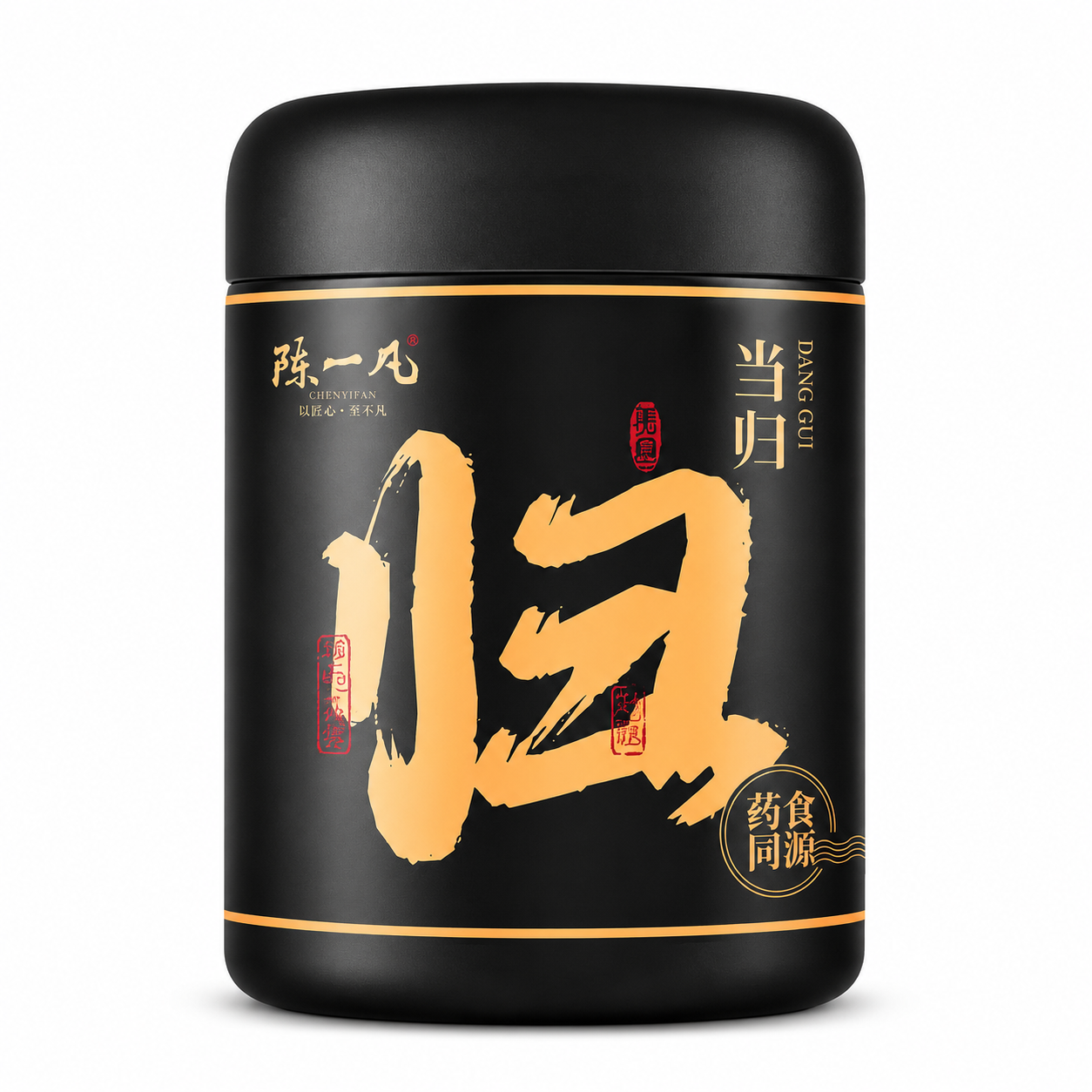
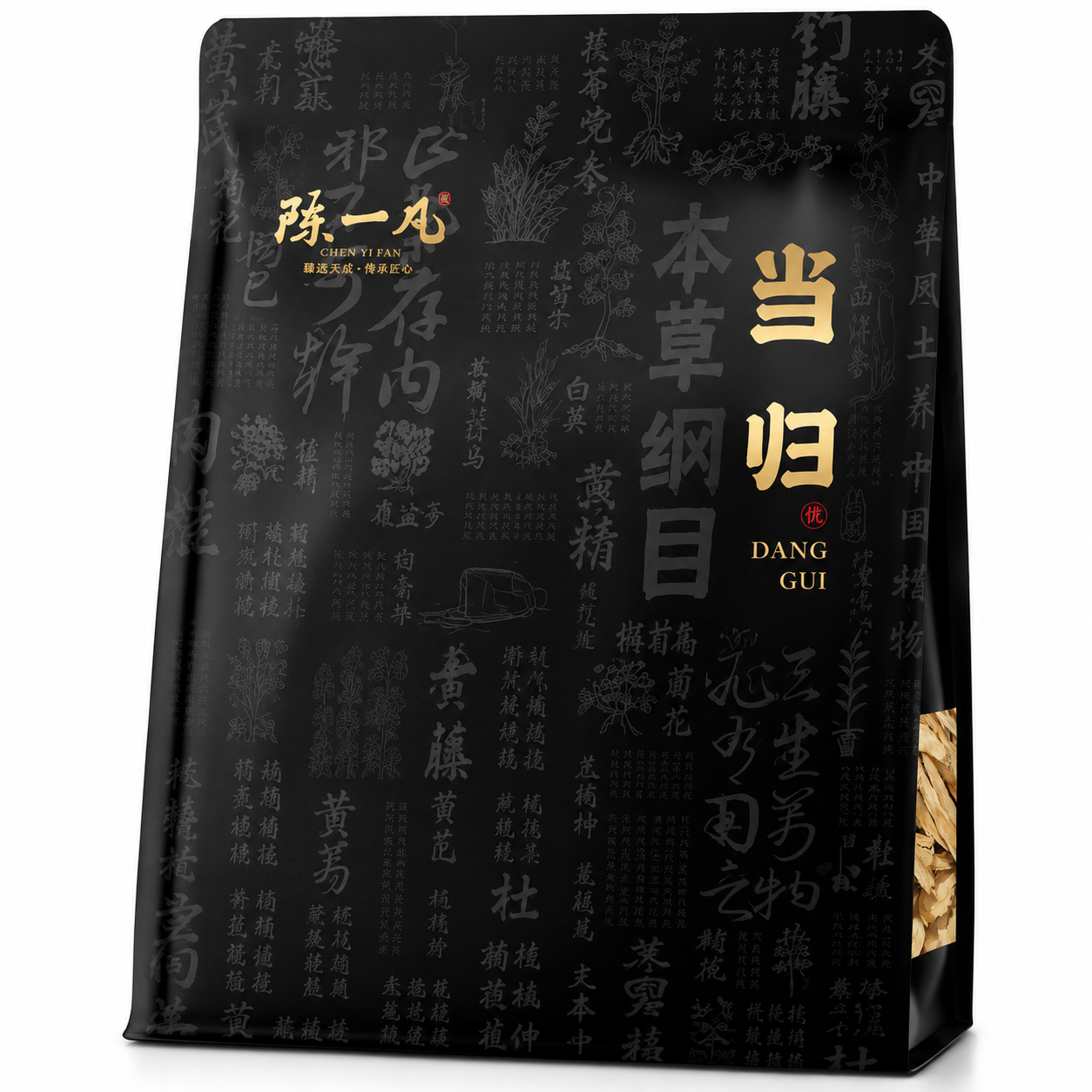
Packaging: Black-and-gold storage container
-
Ideal for: Shoppers familiar with Dang Gui · Home cooks exploring traditional Chinese soups · Botanical-root enthusiasts
-
Important distinction: Dang Gui is different from Ginseng, American Ginseng, Danshen, Astragalus and Chinese Yam
Natural root slices may vary slightly in size, thickness, shape, colour and visible fibrous structure.
What Is Dang Gui / 当归?
Dang Gui / 当归 is the Chinese name used for a traditional botanical root generally identified as Angelica sinensis.
It is commonly known in English as:
Dang Gui · Danggui · Chinese Angelica Root · Angelica sinensis
The dried root is presented here in sliced form, revealing its pale fibrous interior and naturally darker outer edges.
For this product, the clearest identification is:
Angelica Root Slices · Dang Gui · 当归 · Angelica sinensis
Using the botanical identity is particularly useful because “Angelica Root” is a broader term that can refer to different Angelica plants.
Is Dang Gui the Same as Chinese Angelica Root?
Yes.
Chinese Angelica Root is a common English name used for Dang Gui.
For this product:
Dang Gui / 当归 / Chinese Angelica Root / Angelica sinensis
refer to the same botanical-root ingredient.
The more specific Chinese Angelica Root / Angelica sinensis identity is preferable to using the broad term “Angelica Root” alone.
Appearance & Natural Root Character
Dang Gui has a recognizable sliced-root appearance.
Typical characteristics include:
-
Pale cream to golden interior
-
Tan to darker brown outer edges
-
Visible natural root fibres
-
Long or irregular sliced forms
-
Naturally textured surfaces
-
Variation in thickness
-
Variation in size and colour
These differences are expected in a natural agricultural root ingredient.
The sliced format keeps the ingredient itself visible, making the natural root grain, fibrous structure and contrasting interior and exterior colours easy to appreciate.
Taste & Character
Dang Gui is not a neutral or strongly sweet pantry ingredient.
Flavour Character:
Aromatic · Earthy · Root-like · Slightly sweet · Gently bitter
Its aroma is one of its defining sensory characteristics and may be considerably more noticeable than its sweetness.
Compared with mild culinary roots, Dang Gui provides a much more distinctive traditional botanical-root experience.
Although a slightly sweet element may be present, it should not be expected to taste like dried fruit or a dessert ingredient.
The aroma and earthy root character remain more prominent.
How to Use Dang Gui Root Slices
Dang Gui should be used according to the product-specific preparation directions.
Depending on the product label and an appropriate recipe, it may be incorporated into:
-
Traditional-inspired soups
-
Cooked root preparations
-
Botanical ingredient combinations
-
Other recipes specifically calling for Dang Gui
01 · Check
Read the serving amount and preparation directions provided on the product packaging.
02 · Measure
Use only the quantity directed by the product label or recipe.
03 · Prepare
Rinse or otherwise prepare the slices if directed.
04 · Cook or Prepare
Follow the specified cooking or preparation method.
05 · Follow Product Guidance
Observe all serving, preparation, warning and usage information supplied with the product.
Do not automatically apply ordinary loose-leaf tea brewing parameters.
Dang Gui for Traditional-Inspired Soups
One of the clearest culinary contexts for Dang Gui is traditional-inspired soup preparation.
Depending on the recipe, the root slices may be cooked alongside compatible ingredients to contribute their distinctive:
Aromatic · Earthy · Root-Like
character.
Because soup recipes can vary significantly in ingredient ratios and cooking methods, use:
An Appropriate Recipe + Product-Label Directions
rather than improvising quantities.
For shoppers specifically looking for Dang Gui for Soup or Chinese Angelica Root for Soup, this is one of the clearest ways to understand the product's culinary role.
How Much Dang Gui Should I Use?
Use the serving amount specified on the product label and the quantity called for by the recipe.
This page does not assign an independent universal serving amount.
The product-specific directions should take priority.
Is Dang Gui a Tea?
Not in the conventional sense.
Traditional:
Green Tea · White Tea · Black Tea · Oolong · Pu-erh
come from Camellia sinensis.
Dang Gui is a:
Traditional Botanical Root
Consumers may search for terms such as:
Dang Gui Tea · Angelica Root Tea · Chinese Angelica Tea
but the product itself is more accurately described as a botanical-root ingredient.
Can Dang Gui Be Brewed Like Tea?
Do not automatically use ordinary loose-leaf tea brewing parameters.
Dang Gui is a botanical root rather than tea leaves.
Follow the serving amount, water quantity, preparation method and duration provided on the product packaging or in an appropriate recipe.
Dang Gui vs. American Ginseng
Dang Gui and American Ginseng are completely different botanical roots.
Dang Gui
-
Chinese name: 当归
-
Botanical identity: Angelica sinensis
-
Root slices
-
Pale-golden interior with darker edges
-
Aromatic, earthy and gently bitter
American Ginseng
-
Chinese name: 西洋参
-
Botanical identity: Panax quinquefolius
-
Root slices
-
Generally paler appearance
-
Distinct Ginseng-root character
Their similar sliced-root presentation should not lead shoppers to treat them as interchangeable.
Dang Gui vs. Danshen
Dang Gui and Danshen are both traditional Chinese botanical roots, but their identities and sensory profiles are different.
Dang Gui / 当归
-
Angelica sinensis
-
Pale-golden with darker edges
-
Aromatic and earthy
-
Slightly sweet and gently bitter
-
Pronounced aromatic-root identity
Danshen / 丹参
-
Salvia miltiorrhiza
-
Rust-red and tan
-
Earthy and naturally bitter
-
Strong red-root visual identity
They are separate botanical ingredients and should not automatically be substituted for one another.
Dang Gui vs. Astragalus
Dang Gui is also different from Astragalus / Huang Qi / 黄芪.
Dang Gui
-
当归
-
Root slices
-
Pale-golden with darker edges
-
Aromatic, earthy and distinctive
Astragalus
-
黄芪
-
Root slices
-
Usually pale yellow-beige
-
Milder root character
Although both may appear in traditional botanical collections, they are different ingredients.
Dang Gui vs. Chinese Yam
Dang Gui and Chinese Yam have particularly different culinary identities.
Dang Gui / 当归
-
Aromatic traditional botanical root
-
Distinctive root-forward character
-
Carefully prepared soups and root-based recipes
Chinese Yam / Shan Yao / 山药
-
Mild, starchier culinary root
-
More everyday culinary character
-
Congee, porridge, soups and cooking
For PandaHomeMart, Dang Gui belongs most naturally within:
Healing Botanicals → Botanical Roots
while Chinese Yam leans more strongly toward everyday culinary use.
A Distinctive Addition to the Botanical Root Pantry
Dang Gui fits naturally alongside:
Danshen · Astragalus · American Ginseng · Red Ginseng · Mai Dong · Polygonatum · Ginger · Other Traditional Botanical Roots
Within the broader root pantry:
Danshen → Rust-red · Earthy · Bitter
Mai Dong → Pale spindle tubers · Delicate
Ginger → Golden · Warm · Spicy
Chinese Yam → Pale · Starchy · Culinary
Dang Gui → Aromatic · Earthy · Slightly sweet · Gently bitter · Soup-oriented
This gives Dang Gui a clear role:
The aromatic root choice for carefully prepared traditional-inspired soups and botanical recipes.
Important Product Guidance
Dang Gui is a traditional botanical ingredient, not an ordinary dried fruit or everyday beverage ingredient.
For this product:
-
Follow the serving amount provided on the product label
-
Follow all product-specific preparation directions
-
Follow all warnings and usage information printed on the packaging
-
Do not automatically apply conventional loose-leaf tea parameters
-
Do not assume Dang Gui is interchangeable with Ginseng, American Ginseng, Danshen, Astragalus or other roots
-
If the packaging identifies specific restrictions or recommends additional guidance, follow those directions
This page intentionally does not assign treatment claims, health outcomes or universal serving instructions beyond the information provided for the product.
Storage & Care
Keep the container securely closed in a cool, dry place away from moisture, excessive humidity, direct sunlight, heat and strong odours.
Use a clean, dry utensil when handling the slices.
Refer to the product packaging for the best-before date and all additional preparation, usage and storage information.
Frequently Asked Questions
What is Dang Gui?
Dang Gui / 当归 is a traditional Chinese botanical root generally identified as Angelica sinensis.
What does Dang Gui mean?
Dang Gui / 当归 is the Chinese name used for Angelica sinensis root.
For product identification:
Dang Gui = 当归 = Chinese Angelica Root = Angelica sinensis
How much is included?
This package contains 50 g / 1.76 oz of dried Angelica Root Slices.
What is the English name for Dang Gui?
It is commonly called Chinese Angelica Root.
Because “Angelica Root” is a broader term, Chinese Angelica Root / Angelica sinensis is more precise for this product.
What is the botanical name of Dang Gui?
The botanical name generally associated with Dang Gui is Angelica sinensis.
Is Dang Gui the same as Chinese Angelica Root?
Yes.
Chinese Angelica Root is a common English name for Dang Gui.
Is Dang Gui the same as Angelica Root?
“Angelica Root” is a broader term.
This product is specifically identified as Angelica sinensis / Dang Gui / 当归, so that more precise identity should be used.
Is this whole root?
No.
This product is presented as dried root slices, rather than whole roots or powder.
What does Dang Gui look like?
Dang Gui slices typically have a pale cream-to-golden interior, naturally darker tan-to-brown edges and visible root fibres.
Natural variation in thickness, shape and colour may occur.
What does Dang Gui taste like?
It generally has an:
Aromatic · Earthy · Root-Like · Slightly Sweet · Gently Bitter
character.
Is Dang Gui sweet?
Only slightly.
Its aroma and earthy root character are more prominent than its sweetness.
Why is Dang Gui aromatic?
A distinctive natural root aroma is one of Dang Gui's defining sensory characteristics.
Is Dang Gui the same as Ginseng?
No.
Dang Gui and Ginseng are botanically different plants.
Dang Gui is associated with Angelica sinensis, while Ginseng belongs to the Panax group.
Is Dang Gui the same as American Ginseng?
No.
Dang Gui is Angelica sinensis, while American Ginseng is Panax quinquefolius.
Is Dang Gui the same as Danshen?
No.
Dang Gui is associated with Angelica sinensis, while Danshen is Salvia miltiorrhiza.
They also differ in appearance and sensory character.
Is Dang Gui the same as Astragalus?
No.
Dang Gui / 当归 and Astragalus / Huang Qi / 黄芪 are separate botanical roots.
Dang Gui has a more pronounced aromatic root character, while Astragalus is generally milder.
Is Dang Gui the same as Chinese Yam?
No.
Dang Gui is an aromatic botanical root, while Chinese Yam / Shan Yao is a milder, starchier culinary root ingredient.
Can Dang Gui be used in soup?
Yes.
Dang Gui may be incorporated into appropriate traditional-inspired soup recipes according to the product directions and recipe being followed.
What is the best culinary use for Dang Gui?
Traditional-inspired soup preparation is one of the clearest culinary contexts supported for this product.
Dang Gui may also appear in other appropriate cooked root preparations.
How much Dang Gui should I use?
Use the serving amount specified on the product label and the quantity called for by the recipe.
This page does not assign a universal serving amount.
Can Dang Gui be brewed like tea?
Do not automatically use conventional loose-leaf tea parameters.
Dang Gui is a botanical root.
Follow the preparation directions provided on the product label or in an appropriate recipe.
Is Dang Gui a tea?
No.
Dang Gui is a botanical root rather than conventional tea from Camellia sinensis.
“Dang Gui Tea” may be used as a search phrase, but botanical-root preparation is the more accurate product description.
Are Dang Gui Root Slices the same as Dang Gui Powder?
No.
This product is presented as visible dried root slices, while Dang Gui Powder is a finely ground product format.
The two formats may behave differently during preparation.
Why choose Dang Gui Root Slices instead of powder?
The sliced format keeps the natural root structure visible, allowing you to see the pale interior, darker edges and fibrous grain.
It also provides a clearly identifiable whole-ingredient format.
Are Dang Gui Root Slices suitable for beginners?
They can be suitable for shoppers intentionally exploring traditional Chinese roots, but Dang Gui has a stronger and more aromatic character than mild ingredients such as Chinese Yam.
First-time users should follow the product-specific serving and preparation directions carefully.
Who are Dang Gui Root Slices best for?
They are especially suited to shoppers already familiar with Dang Gui, people searching for Chinese Angelica Root or Angelica sinensis, home cooks exploring traditional Chinese soup ingredients and botanical-root enthusiasts who prefer identifiable sliced roots rather than powders.
Keep Its Distinctive Aromatic Character Close
Pale golden root slices. Naturally darker edges. A rich and unmistakable botanical aroma.
Explore Dang Gui in carefully prepared traditional-inspired soups or other recipes specifically designed for the ingredient.
Its compact sliced-root format keeps the natural root structure visible, while its aromatic, earthy character gives it a clear place within the traditional botanical pantry.
Choose Angelica Root Slices (Dang Gui)™ — 50 g and add to cart.
Bring Eastern Living Home.
Share




Complete Your Tea Ritual


