


PandaHomeMart
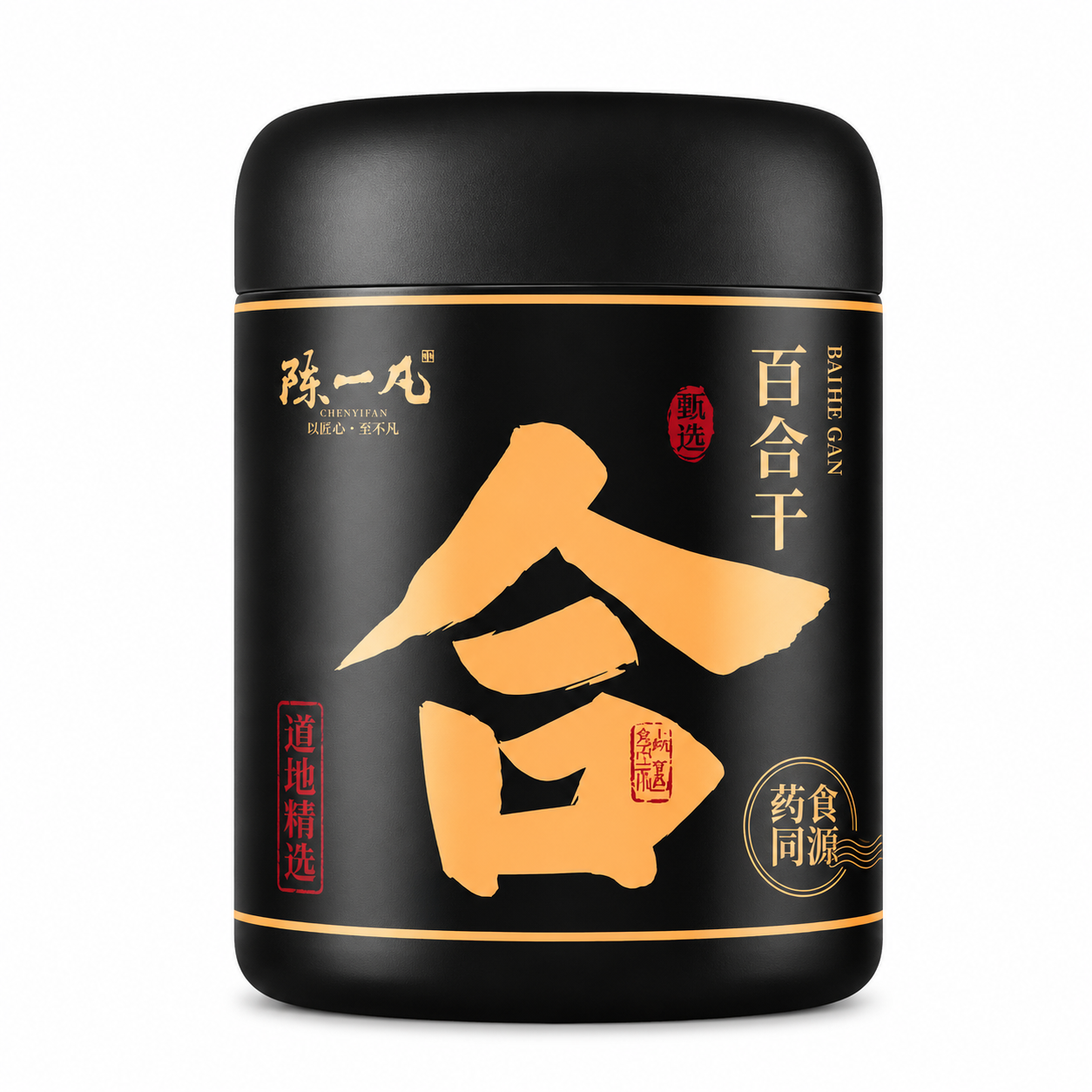
Dried Lily Bulbs (Bai He Gan) – 140 g
Dried Lily Bulbs (Bai He Gan) – 140 g
Couldn't load pickup availability
Dried Lily Bulbs (Bai He Gan) — 140 g
Delicate ivory pieces. Gentle natural sweetness. A traditional Chinese pantry ingredient for soups, congee and comforting desserts.
Discover Dried Lily Bulbs (Bai He Gan / 百合干), dried sections of edible lily bulb with a naturally pale ivory-to-cream colour and elegant petal-like form.
Mild, delicate and gently sweet, Bai He Gan works naturally across both savoury and sweet recipes. When properly prepared and cooked, the firm dried pieces soften into a tender, pleasant texture that complements soups, congee, sweet soups and traditional-inspired desserts.
Each package contains 140 g / 4.94 oz of Dried Lily Bulbs.
Although the pieces may resemble flower petals, they come from the edible lily bulb—not the lily flower.
Why You’ll Appreciate Them
-
Real edible lily bulb — dried bulb sections rather than flower petals
-
Distinctive ivory appearance — curved, layered and naturally petal-like
-
Gentle flavour — mild, delicate, gently sweet and slightly earthy
-
Tender after cooking — firm when dry and pleasantly soft when prepared
-
Savoury-to-sweet versatility — ideal for soups, congee, sweet soups and desserts
-
Easy to pair — explore with Lotus Seeds, Snow Fungus, Red Jujube, Goji Berry or Longan
-
Practical 140 g size — suitable for repeated home cooking
Product at a Glance
-
Product: Dried Lily Bulbs
-
Chinese name: 百合干
-
Pinyin: Bai He Gan
-
Also known as: Dried Lily Bulb · Dried Lily Bulb Petals · Bai He
-
Plant part: Edible lily bulb
-
Format: Dried bulb sections / petal-like pieces
-
Net weight: 140 g / 4.94 oz
-
Appearance: Pale ivory-to-cream curved pieces
-
Dry texture: Firm · Lightweight
-
Cooked texture: Tender · Pleasantly soft
-
Flavour: Mild · Delicate · Gently sweet · Slightly earthy
-
Category: Traditional Chinese Culinary Ingredient
-
Best for: Soups · Congee · Sweet soups · Cooked desserts
-
Preparation: Inspect · Rinse or soak as directed · Cook
-
Tea leaves: Contains no Camellia sinensis tea leaves
-
Important: Edible lily bulb pieces—not dried lily flowers
Natural dried lily bulb pieces may vary slightly in size, shape, thickness and ivory-to-pale-yellow colour.
What Are Dried Lily Bulbs / Bai He Gan?
Dried Lily Bulbs / Bai He Gan / 百合干 are dried sections of edible lily bulb traditionally used as a culinary ingredient in Chinese cooking.
The name can be understood simply:
Bai He / 百合 = Lily Bulb
Gan / 干 = Dried
So:
Bai He Gan / 百合干 = Dried Lily Bulbs
For clear product identification:
Dried Lily Bulbs · Bai He Gan · 百合干 · Edible Lily Bulb
all refer here to this culinary ingredient.
Are Dried Lily Bulbs Flowers?
No.
This distinction is important.
Although Bai He Gan has an elegant petal-like appearance, the pieces come from the edible bulb portion of the lily rather than the flower.
| Dried Lily Bulbs | Dried Lily Flowers | |
|---|---|---|
| Plant Part | Bulb | Flower |
| Form | Curved ivory sections | Floral material |
| Appearance | Petal-like pieces | Actual dried flower |
| Flavour | Mild & gently sweet | Product-dependent |
| Primary Use | Soups · Congee · Desserts | Product-dependent |
| Same Product? | No | No |
For this product:
Petal-Like Appearance ≠ Flower
Use only food-grade edible lily bulb products specifically intended for culinary use. Do not substitute ornamental lilies or unidentified lily material.
Taste & Character
Bai He Gan offers a soft and approachable sensory profile:
Mild · Delicate · Gently Sweet · Slightly Earthy
Its flavour is intentionally understated.
Compared with stronger ingredients:
Ginger → Spicy & aromatic
Dandelion Root → Earthy & bitter
Chen Pi → Aromatic citrus
Dried Lily Bulbs → Mild · Delicate · Gently sweet
This gentle character allows other ingredients in soups, congee and desserts to remain prominent.
Texture: Dry to Cooked
Texture transformation is one of the most useful characteristics of dried lily bulb.
Before Cooking
Firm · Dry · Lightweight
After Proper Cooking
Tender · Pleasantly Soft
The exact final texture depends on the preparation method and cooking time.
This transformation makes Bai He Gan particularly suited to comforting soups, porridges and dessert-style recipes.
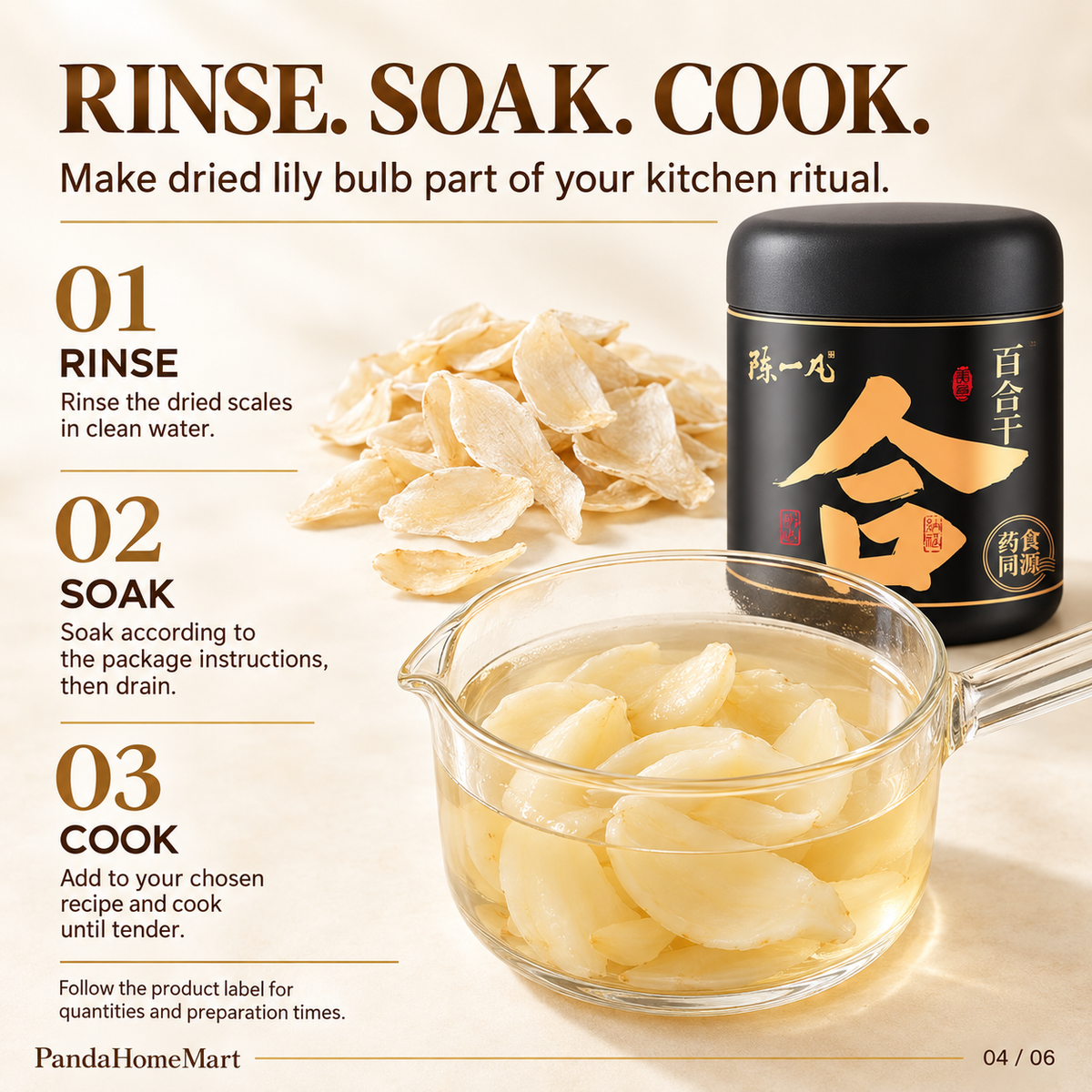
How to Prepare
Dried Lily Bulbs are primarily a culinary ingredient and should be prepared according to the product directions.
1 · Inspect
Check the dried pieces and follow any cleaning instructions provided on the packaging.
2 · Rinse or Soak
Rinse and, when directed, soak the lily bulb pieces before cooking.
3 · Cook
Add to soup, congee, sweet soup or another appropriate cooked recipe.
4 · Serve
Cook until the recommended tenderness is reached according to the recipe and product directions.
The simple preparation path is:
Inspect → Rinse / Soak as Directed → Cook → Enjoy
Do not automatically apply conventional loose-leaf tea brewing parameters.
Ways to Enjoy
Chinese-Style Soups
Soup is one of the most natural uses for Bai He Gan.
Its mild flavour allows it to complement rather than overpower other ingredients.
Rice Congee
Add properly prepared Dried Lily Bulbs to an appropriate rice congee recipe for gentle flavour and tender texture.
Black Rice & Mixed-Grain Porridge
The pale ivory pieces create attractive visual contrast with darker grains while adding a softer texture.
Sweet Soups
Bai He Gan works particularly naturally in Chinese-style sweet soups alongside compatible seeds, fruits and fungi.
Cooked Desserts
Its mild sweetness and tender texture also make it suitable for appropriate traditional-inspired dessert recipes.
Best Soup & Dessert Pairings
Lily Bulb + Lotus Seeds
Gentle lily bulb + substantial lotus seed
Two mild traditional ingredients with complementary textures.
Lily Bulb + Snow Fungus
Tender ivory pieces + delicate frilled fungus
A natural combination for suitable Chinese-style sweet soups.
Lily Bulb + Red Jujube
Mild bulb + mellow fruit sweetness
Red Jujube adds deeper colour and rounded dried-fruit character.
Lily Bulb + Goji Berry
Delicate ivory + bright red berry
Goji adds visual contrast and gentle fruit notes.
Lily Bulb + Longan
Mild bulb + richer dried-fruit sweetness
Longan provides a deeper sweet-fruit direction.
Lily Bulb + Snow Swallow
Tender bulb + translucent texture
Snow Swallow provides a distinctly different mouthfeel in suitable dessert preparations.
Follow preparation directions appropriate to every ingredient being combined.
Dried Lily Bulbs vs. Lotus Seeds vs. Snow Fungus
These ingredients often appear in similar recipes but provide very different textures and identities.
| Dried Lily Bulbs | Lotus Seeds | Snow Fungus | |
|---|---|---|---|
| Ingredient Type | Edible lily bulb | Lotus seed | Edible fungus |
| Appearance | Ivory petal-like pieces | Pale rounded seeds | Pale frilled fungus |
| Flavour | Mild & gently sweet | Mild & seed-like | Mild & neutral |
| Texture | Tender after cooking | Soft & substantial | Delicate & soft |
| Best For | Soup · Congee · Dessert | Soup · Porridge · Dessert | Sweet soups · Desserts |
| Same Ingredient? | No | No | No |
A simple texture guide:
Dried Lily Bulbs → Gentle & Tender
Lotus Seeds → Mild & Substantial
Snow Fungus → Delicate & Frilled
They work well together but should not be treated as interchangeable.
Is Lily Bulb Tea Actually Tea?
No.
Dried Lily Bulbs do not come from Camellia sinensis.
Although consumers may search for:
Lily Bulb Tea · Bai He Tea · 百合茶
the strongest and most accurate positioning for this product is:
Dried Lily Bulbs for Soups, Congee & Chinese-Style Desserts
This tells shoppers more clearly what the product is and how it is naturally used.
A Gentle Addition to the Traditional Pantry
Dried Lily Bulbs fit naturally alongside:
Lotus Seeds · Snow Fungus · Red Jujube · Goji Berry · Longan · Snow Swallow · Peach Gum · Gorgon Seeds
Within a texture-driven pantry:
Dried Lily Bulbs → Ivory · Petal-like · Mild · Tender
Lotus Seeds → Rounded · Mild · Substantial
Snow Fungus → Pale · Frilled · Delicate
Snow Swallow → Translucent · Gelatinous
Peach Gum → Amber · Jelly-like
This gives Bai He Gan a clear role as the gentle ivory culinary bulb for soups, congee and comforting desserts.
Storage & Care
Keep the dried Lily Bulbs tightly sealed in a cool, dry place away from moisture, excessive humidity, direct sunlight, heat and strong odours.
Use clean, dry utensils when handling the pieces.
After soaking or cooking, follow appropriate food-storage guidance and the product or recipe directions.
Refer to the product packaging for best-before information and any additional storage instructions.
Product Guidance
Dried Lily Bulbs are intended as a culinary food ingredient.
Always:
-
Follow preparation instructions provided on the packaging
-
Inspect and rinse the dried pieces as directed
-
Soak when instructed
-
Cook according to product and recipe directions
-
Use only food-grade edible lily bulb products intended for culinary use
-
Do not substitute ornamental lilies or unidentified lily material
-
Follow preparation guidance for every ingredient used in a combination
Frequently Asked Questions
What are Dried Lily Bulbs?
Dried Lily Bulbs are dried sections of edible lily bulb, known in Chinese as Bai He Gan / 百合干, traditionally used in soups, congee and desserts.
What does Bai He Gan mean?
Bai He / 百合 means Lily Bulb and Gan / 干 means Dried.
Together:
Bai He Gan / 百合干 = Dried Lily Bulbs
How much is included?
Each package contains 140 g / 4.94 oz of Dried Lily Bulbs.
Are Dried Lily Bulbs flowers?
No.
They are pieces of the edible bulb, not dried Lily Flowers. Their petal-like shape refers only to their appearance.
Are these edible Lily Bulbs?
Yes.
This product is positioned as a food-grade edible lily bulb ingredient intended for culinary preparation.
Can ornamental Lily Bulbs be used for cooking?
Do not substitute ornamental lilies or unidentified lily material.
Only products specifically sold and labelled as edible food ingredients should be consumed.
What do Dried Lily Bulbs taste like?
They generally have a mild, delicate, gently sweet and slightly earthy character.
What texture do they have after cooking?
After proper preparation and cooking, the firm dried pieces become tender and pleasantly soft.
Do Dried Lily Bulbs need to be soaked?
Preparation varies by product and recipe.
Rinse or soak according to the directions provided on the packaging.
Do Dried Lily Bulbs need to be cooked?
This product is best used in appropriate cooked recipes.
Follow the package and recipe directions.
Can Dried Lily Bulbs be used in soup?
Yes.
Soup is one of the most natural culinary uses for Bai He Gan.
Can they be used in congee?
Yes.
They can be incorporated into appropriate rice congee, Black Rice porridge and mixed-grain recipes.
Can Dried Lily Bulbs be used in desserts?
Yes.
They are particularly well suited to Chinese-style sweet soups and cooked desserts.
What pairs well with Dried Lily Bulbs?
Useful culinary pairings include:
Lotus Seeds · Snow Fungus · Red Jujube · Goji Berry · Longan · Snow Swallow
Are Dried Lily Bulbs the same as Lotus Seeds?
No.
Dried Lily Bulbs are sections of an edible lily bulb. Lotus Seeds are seeds from the lotus plant.
Are Dried Lily Bulbs the same as Lotus Seed Hearts?
No.
Lotus Seed Hearts are small green inner seed germs with a much more distinctly bitter character.
Dried Lily Bulbs are mild and gently sweet.
Are Dried Lily Bulbs the same as Snow Fungus?
No.
Dried Lily Bulbs are edible bulb sections, while Snow Fungus is an edible fungus with a pale frilled form and different cooked texture.
Is Lily Bulb Tea real tea?
No.
Lily Bulb does not come from Camellia sinensis. This product is primarily a culinary ingredient for soups, congee and desserts.
Who are Dried Lily Bulbs best for?
They are especially suited to home cooks, traditional Chinese pantry explorers and people preparing soups, congee, Lotus Seed desserts, Snow Fungus sweet soups or other gentle savoury-to-sweet recipes.
From Soup Pot to Dessert Bowl
Pale ivory pieces. Gentle natural sweetness. Tender texture after cooking.
Add Bai He Gan to a comforting soup, fold it into warm congee, pair it with Lotus Seeds or Snow Fungus, or bring it into a traditional-inspired sweet soup with Red Jujube, Goji Berry or Longan.
Add Dried Lily Bulbs (Bai He Gan) — 140 g to your pantry and discover a gentle traditional ingredient that moves naturally from savoury soups to comforting desserts.
Bring Eastern Living Home.
Share




Complete Your Tea Ritual


