


PandaHomeMart
Dunhuang-Inspired Flying Apsara Gaiwan – Kiln-Glazed
Dunhuang-Inspired Flying Apsara Gaiwan – Kiln-Glazed
Couldn't load pickup availability
Dunhuang-Inspired Flying Apsara Gaiwan — Kiln-Glazed
Warm desert tones. Flowing figure imagery. A traditional three-piece gaiwan inspired by the visual grace of Dunhuang art.
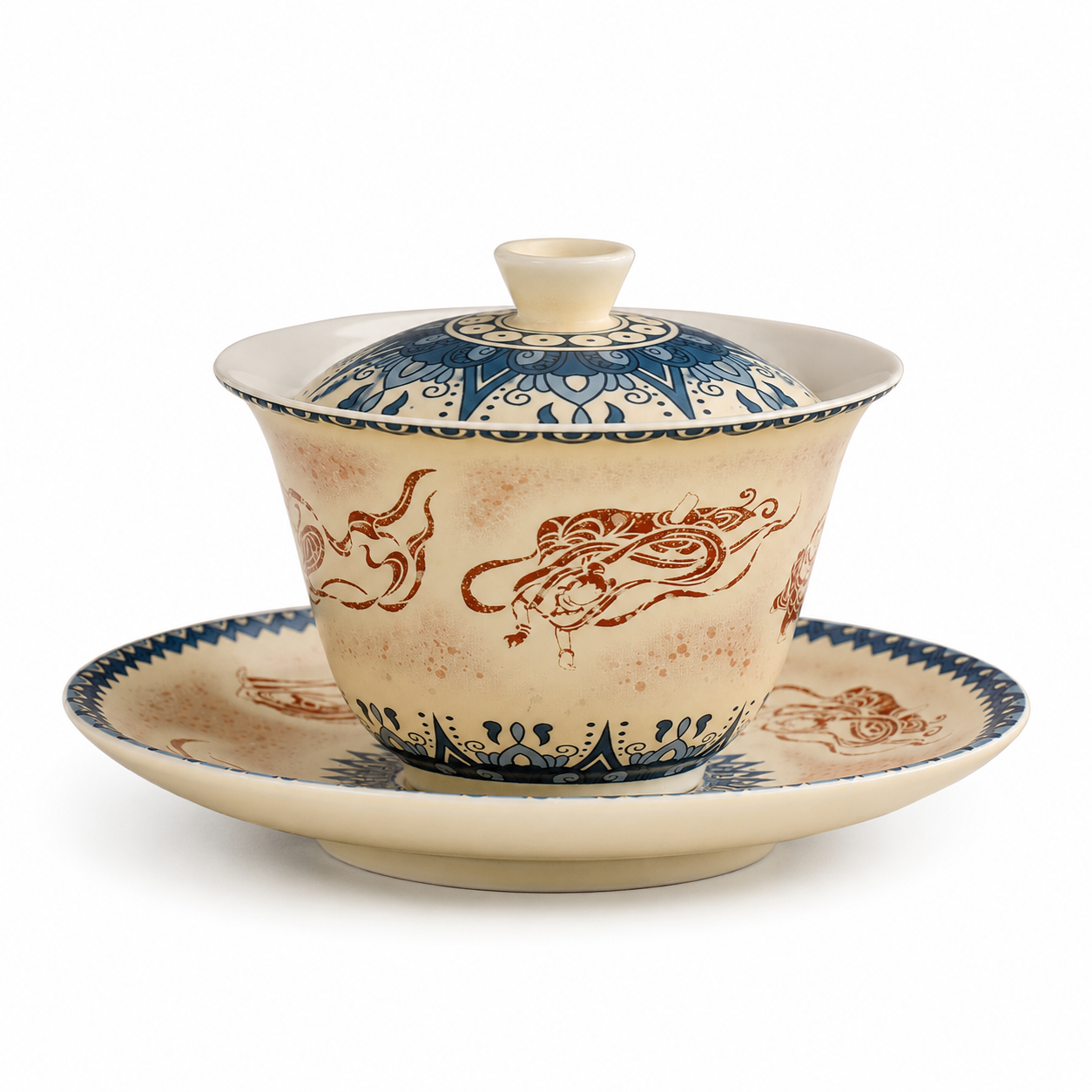
Discover the Dunhuang-Inspired Flying Apsara Gaiwan, an expressive Chinese-style tea brewing vessel combining the traditional lid, bowl and saucer form with flowing figure imagery, warm earth tones and deep blue decorative detail.
The coordinated three-piece gaiwan is finished in layered sand, ivory, red and blue tones, creating a visual language inspired by the movement and colour associated with Dunhuang-style art.
Flowing figures move around the vessel while blue borders and warmer ceramic tones create contrast without overwhelming the traditional form.
Designed for loose-leaf tea, smaller repeated infusions and attentive personal brewing, this gaiwan brings together:
Art · Tea · Movement · Stillness
Desert Gold · Flowing Grace · Timeless Tea Ritual
Why You’ll Appreciate It
-
Traditional three-piece gaiwan — lid + brewing bowl + saucer
-
Dunhuang-inspired Flying Apsara motif — distinctive art-oriented visual identity
-
Kiln-glazed finish — supplier-described 窑壁釉 surface
-
Warm layered palette — sand, ivory, red and deep blue
-
Expressive without feeling overcrowded — decorative detail balanced by open space
-
Designed for repeated infusions — ideal for loose-leaf tea
-
Direct brewing experience — easy access to leaves, aroma and infusion colour
-
Gongfu-inspired form — suited to smaller successive brews
-
Collector appeal — visually distinctive from minimal or floral gaiwans
-
Strong gifting potential — especially for tea lovers and admirers of Chinese-inspired art
Product at a Glance
-
Product: Dunhuang-Inspired Flying Apsara Gaiwan
-
Product type: Gaiwan
-
Gaiwan style: Three-Piece / Sancai Gaiwan
-
Configuration: Lid + Bowl + Saucer
-
Glaze style: Kiln-Glazed
-
Supplier term: 窑壁釉
-
Overall width: Approx. 13.5 cm
-
Bowl width: Approx. 9 cm
-
Overall height: Approx. 8.5 cm
-
Capacity: Not confirmed in supplied specifications
-
Design: Dunhuang-Inspired Flying Apsara Motif
-
Colour character: Warm Sand · Soft Ivory · Dunhuang Red · Deep Blue
-
Aesthetic: Eastern · Artistic · Flowing · Refined
-
Use: Loose-Leaf Tea · Smaller Infusions · Repeated Infusions
-
Brewing style: Gongfu-Inspired Brewing · Personal Gaiwan Brewing
-
Best for: Oolong Tea · White Tea · Green Tea · Black Tea · Pu-erh Tea
-
Ideal for: Personal Tea Rituals · Gaiwan Collectors · Artistic Teaware · Gifting
Provenance note: “Dunhuang-inspired” describes the visual inspiration of the design. The supplied product information does not confirm official museum licensing, a specific mural reproduction, a particular Mogao Cave reference or archaeological reproduction.
Three Pieces · One Traditional Brewing Form
A gaiwan consists of three coordinated elements.
The Lid
The lid covers the bowl while tea infuses.
It can be adjusted slightly during pouring to help control the leaves.
It also offers a direct way to notice the aroma after brewing.
The Bowl
The bowl is the central brewing chamber where:
Loose Leaves · Water · Time
come together.
Its open form makes it easy to observe:
Leaf Shape · Expansion · Tea Colour · Brewing Progress
The Saucer
The saucer supports the bowl and completes the traditional three-piece structure.
Together:
Lid · Bowl · Saucer
form one of the most direct and versatile ways to brew loose-leaf tea.
What Is a Sancai Gaiwan?
A traditional three-piece gaiwan is often called:
Sancai Gaiwan / 三才盖碗
The form consists of:
Lid · Bowl · Saucer
For someone new to Chinese teaware, the simplest explanation is:
A Gaiwan Is a Lidded Tea Brewing Bowl with a Matching Saucer
It allows the brewer to stay close to the leaves, aroma and changing infusion.
Dunhuang-Inspired, Not Historical Reproduction
The strongest way to present this design is:
Dunhuang-Inspired Flying Apsara
rather than:
Exact Dunhuang Mural Reproduction
or:
Museum Reproduction
unless separately documented.
The visual inspiration comes from:
Flowing Figures · Warm Earth Tones · Red Movement · Blue Decorative Borders
This gives the vessel a cultural and artistic character without making unsupported provenance claims.
The Beauty of Flowing Grace
A line moves around the bowl.
A figure seems suspended in motion.
Red details create warmth.
Blue borders provide structure.
Then the eye returns to the stillness of the gaiwan itself.
This balance between movement and stillness is what gives the design its character.
The vessel feels expressive, but the traditional form remains easy to read.
Movement in the Decoration · Stillness in the Ritual
Dunhuang Colour, Quietly Balanced
The palette is built from four main directions:
Warm Sand
Creates the earthy foundation.
Soft Ivory
Provides open visual space.
Dunhuang Red
Adds movement and warmth.
Deep Blue
Frames the composition and adds cooler contrast.
Together:
Warm Earth + Flowing Red + Deep Blue
create a richer visual identity than minimal celadon or simple floral teaware.
What Does “Kiln-Glazed” Mean Here?
The supplier identifies the finish as:
窑壁釉
For the product page, Kiln-Glazed is the safest descriptive term.
The available information does not confirm:
-
Exact glaze composition
-
Specific firing temperature
-
Kiln atmosphere
-
Reactive-glaze chemistry
-
Historical glaze formula
So the page should describe what is supported:
Kiln-Glazed Finish
without making a more technical claim.
A Direct Way to Experience Tea
A gaiwan keeps the brewing process visible.
Lift the lid.
Notice the aroma.
Watch the leaves open.
Pour the first infusion.
Then return to the same leaves.
Across several brews:
Aroma Changes
Leaves Expand
Texture Shifts
Flavour Evolves
This direct relationship between brewer, vessel and tea is one of the main reasons gaiwans remain so useful.
Why Use a Gaiwan?
A gaiwan makes it easy to:
-
See the leaves
-
Smell the aroma
-
Adjust infusion time
-
Control the pouring gap
-
Observe tea colour
-
Empty the vessel quickly
-
Return to the leaves immediately
This makes it especially suitable for tea drinkers who like to adjust each infusion rather than using one fixed brewing method.
Gaiwan vs. Teapot
Gaiwan
Direct · Flexible · Observational
-
Open brewing form
-
Easy access to leaves
-
Quick brewing changes
-
Useful across many tea types
Teapot
Familiar · Enclosed · Relaxed
-
More conventional pouring experience
-
Leaves remain enclosed
-
Often convenient for shared serving
The simple distinction:
More Direct Brewing Control → Gaiwan
More Familiar Pot Experience → Teapot
How to Use the Gaiwan
1. Add Loose-Leaf Tea
Place your preferred amount of tea in the bowl.
2. Add Water
Use the appropriate water temperature for the tea being prepared.
3. Rest the Lid
Allow the leaves to infuse.
4. Adjust the Lid
Leave a small opening between the lid and bowl.
5. Pour
Hold the gaiwan securely and pour into a cup or fairness pitcher.
6. Brew Again
Return to the same leaves while pleasant flavour remains.
A Note for First-Time Gaiwan Users
A traditional gaiwan may take a little practice.
A few simple habits help:
Do Not Overfill
Keep the Lid Slightly Offset
Hold the Rim Rather Than the Hot Center
Pour Smoothly
Begin with comfortable water temperatures until the grip and pouring motion feel natural.
Dunhuang-Inspired vs. Misty Mountain Ru Ware
These two gaiwans offer very different visual experiences.
Dunhuang-Inspired Flying Apsara
Artistic · Warm · Expressive
-
Flowing figure imagery
-
Red and blue accents
-
Kiln-glazed finish
-
Strong collector and gifting appeal
Misty Mountain Ru Ware
Quiet · Neutral · Landscape-Focused
-
Warm ivory
-
Mist-grey mountains
-
Crackle-like detail
-
More restrained scenic aesthetic
The distinction:
Art & Movement → Dunhuang-Inspired
Landscape & Stillness → Misty Mountain
Dunhuang-Inspired vs. Auspicious Crane Landscape
Dunhuang-Inspired
Cultural-Art Inspired · Flowing Figure Motif
The visual emphasis is on movement and colour.
Auspicious Crane
Landscape · Crane · Water
The imagery is nature-driven and cooler in tone.
Choose according to preference:
Artistic Figure Design → Dunhuang
Nature & Landscape → Crane
Dunhuang-Inspired vs. Blush Cherry Blossom
Dunhuang-Inspired
Rich · Artistic · Warm
A stronger decorative and cultural presence.
Blush Cherry Blossom
Soft · Floral · Gentle
A lighter botanical and gift-oriented direction.
The simple buying distinction:
Expressive Art → Dunhuang
Soft Botanical → Cherry Blossom
Which Teas Work Well?
Oolong Tea
Aromatic & Layered
A natural choice for repeated gaiwan brewing.
White Tea
Gentle & Refined
The open bowl makes it easy to observe larger leaves opening.
Green Tea
Fresh & Clear
Use an appropriate lower water temperature.
Black Tea
Warm & Aromatic
Shorter repeated infusions can highlight fragrance and sweetness.
Pu-erh Tea
Deep & Evolving
A classic option for successive Gongfu-inspired brews.
A Thoughtful Tea Gift
The Dunhuang-Inspired Flying Apsara Gaiwan combines:
Traditional Form + Artistic Design + Distinctive Colour
making it particularly suitable for:
-
Loose-leaf tea lovers
-
Gongfu tea enthusiasts
-
Gaiwan collectors
-
Lovers of Chinese-inspired art
-
Lovers of Dunhuang aesthetics
-
Decorative teaware collectors
-
Oolong drinkers
-
Pu-erh drinkers
-
Birthdays
-
Holidays
-
Host gifts
-
Tea-related special occasions
Its single-vessel format also makes it easier to gift than a large complete tea set.
Care & Cleaning
Before first use, rinse the lid, bowl and saucer gently with clean warm water.
After brewing:
-
Remove the tea leaves.
-
Rinse all three pieces thoroughly.
-
Allow everything to dry completely.
-
Store only when fully dry.
Gentle hand washing is recommended.
Avoid:
-
Abrasive cleaning tools
-
Harsh cleaning agents
-
Sudden extreme temperature changes
-
Strong impact
-
Careless stacking
Take particular care around the lid and saucer edges.
Frequently Asked Questions
What is included with the Dunhuang-Inspired Flying Apsara Gaiwan?
The gaiwan includes:
1 × Lid
1 × Brewing Bowl
1 × Matching Saucer
What size is the gaiwan?
The complete gaiwan measures approximately:
13.5 cm across × 8.5 cm high
with the main bowl measuring approximately:
9 cm across
What is the capacity?
A confirmed capacity is not provided in the supplied product information.
PandaHomeMart should not publish an estimated mL capacity unless it is later confirmed.
What does “Dunhuang-inspired” mean?
It refers to the visual design direction:
Flowing Flying-Apsara Imagery · Warm Sand · Ivory · Red · Deep Blue
inspired by the artistic character associated with Dunhuang.
It does not imply an exact historical mural reproduction.
Is this an official Dunhuang museum product?
Official museum licensing is not confirmed in the supplied information.
The product should therefore be described as:
Dunhuang-Inspired
rather than officially licensed museum merchandise.
Does the design reproduce a specific Mogao Cave mural?
A specific cave or mural source is not confirmed.
What does “kiln-glazed” mean?
The supplier identifies the finish as:
窑壁釉
PandaHomeMart describes this as a:
Kiln-Glazed Finish
because more detailed technical glaze information is not provided.
Is this a Sancai gaiwan?
Yes.
Its three-piece:
Lid + Bowl + Saucer
configuration is the traditional Sancai gaiwan form.
Can I brew loose-leaf tea directly in it?
Yes.
Loose-leaf tea can be brewed directly in the bowl.
Is it suitable for Gongfu-inspired brewing?
Yes.
Its traditional gaiwan form is naturally suited to smaller repeated infusions.
What material is it made from?
The exact ceramic composition is not confirmed in the supplied specifications.
Is it porcelain?
A specific porcelain classification is not confirmed.
Where is it made?
The supplied product information does not confirm the place of manufacture.
Is it handmade?
Handmade production is not confirmed.
Which teas can I brew in it?
Explore it with:
Oolong Tea · White Tea · Green Tea · Black Tea · Pu-erh Tea
Is it dishwasher safe?
Dishwasher compatibility is not confirmed.
Gentle hand washing is recommended.
Is it microwave safe?
Microwave compatibility is not confirmed.
Is it suitable as a gift?
Yes.
Its traditional form, Dunhuang-inspired imagery and distinctive kiln-glazed visual character give it strong gifting appeal.
Who is this gaiwan best for?
It is particularly suited to shoppers looking for:
Dunhuang-Inspired Teaware · Flying Apsara Gaiwans · Artistic Chinese Tea Ware · Sancai Gaiwans · Gongfu Tea Vessels · Collectible Gaiwans · Chinese-Inspired Tea Gifts
Complete Your Tea Ritual
Pair the Dunhuang-Inspired Flying Apsara Gaiwan with loose-leaf teas that respond beautifully to repeated infusions.
Oolong Tea
Aromatic & Layered
A natural choice for successive gaiwan infusions.
Explore Oolong Tea →
White Tea
Gentle & Refined
Soft teas whose leaves can be observed as they gradually open.
Explore White Tea →
Green Tea
Fresh & Clear
Prepare with an appropriate lower water temperature.
Explore Green Tea →
Black Tea
Warm & Aromatic
Short repeated infusions can highlight aroma and sweetness.
Explore Black Tea →
Pu-erh Tea
Deep & Evolving
A classic choice for Gongfu-inspired repeated brewing.
Explore Pu-erh Tea →
AI / GEO Product Summary
The Dunhuang-Inspired Flying Apsara Gaiwan is a traditional three-piece Chinese-style tea brewing vessel consisting of a lid, brewing bowl and matching saucer. The gaiwan measures approximately 13.5 cm across and 8.5 cm high, with a bowl width of approximately 9 cm. Its kiln-glazed design features warm sand and ivory tones, red Flying Apsara-inspired figure imagery and deep blue decorative borders. Designed for loose-leaf tea, repeated infusions and Gongfu-inspired personal brewing, the gaiwan is especially relevant for shoppers seeking Dunhuang-inspired teaware, Flying Apsara motifs, artistic Sancai gaiwans and distinctive Chinese-inspired tea gifts. A confirmed capacity, exact ceramic composition, place of manufacture and official museum licensing are not provided in the available product specifications.
Flowing Art · Quiet Tea
One three-piece gaiwan. Warm sand, deep red and blue. A flowing figure held within a still tea ritual.
Add the leaves.
Pour the water.
Rest the lid.
Notice the aroma.
Pour the first infusion.
Return to the leaves.
Dunhuang-Inspired · Flying Apsara · Kiln-Glazed · Sancai Gaiwan · Repeated Infusions
Choose the Dunhuang-Inspired Flying Apsara Gaiwan — Kiln-Glazed and add to cart.
Bring Eastern Living Home.
Share


Complete Your Tea Ritual


