


PandaHomeMart
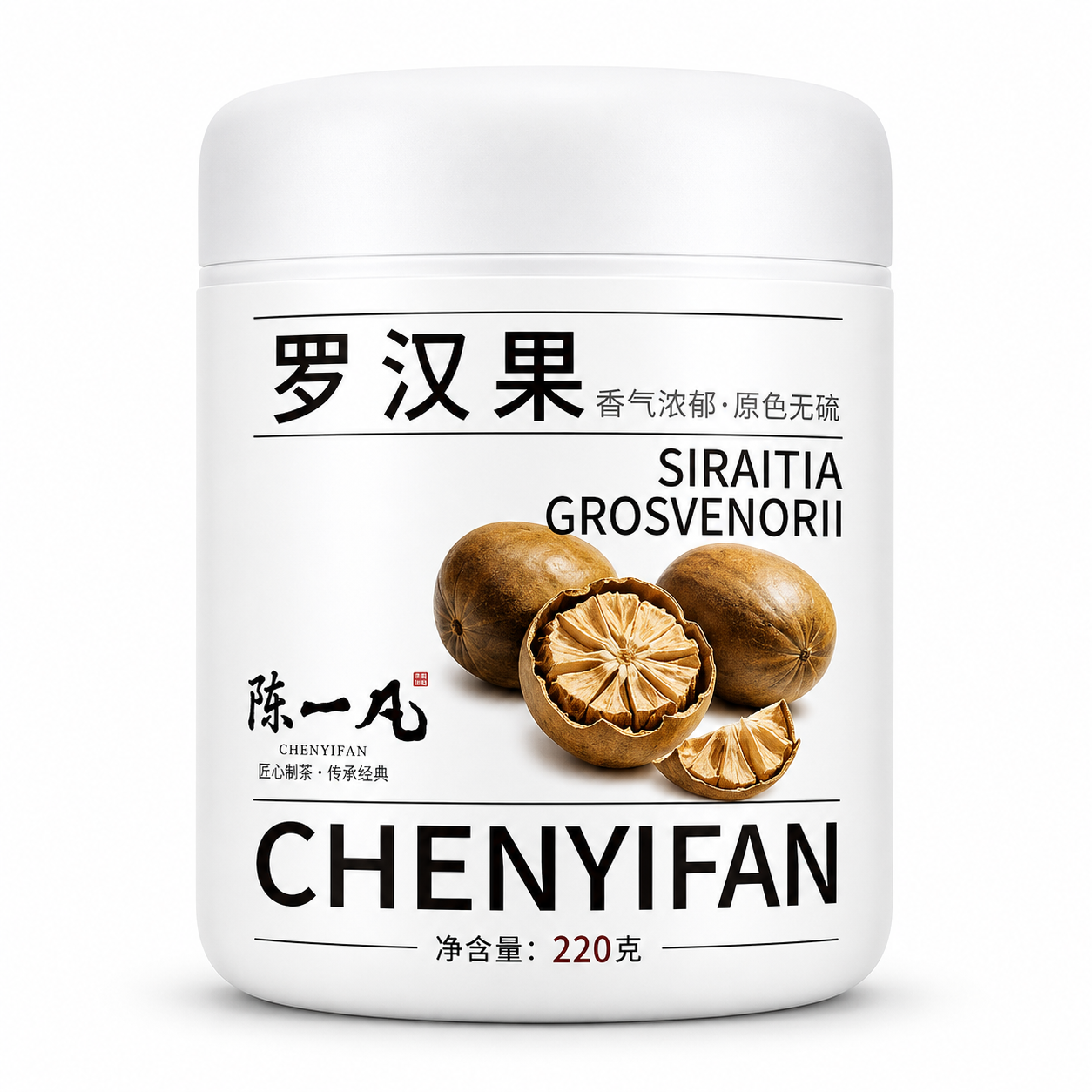
Monk Fruit (Luo Han Guo) – 90 g
Monk Fruit (Luo Han Guo) – 90 g
Couldn't load pickup availability
Monk Fruit (Luo Han Guo) – 90 g
Pronounced natural sweetness. Warm golden infusion. Convenient shell-removed fruit pieces for botanical preparations, tea pairings and traditional-inspired recipes.
Discover Monk Fruit (Luo Han Guo / 罗汉果), a traditional Chinese fruit ingredient presented in shell-removed dried pieces for easier measuring and preparation.
With a net weight of 90 g / 3.17 oz, these golden-to-amber fruit pieces offer one of the most distinctive naturally sweet sensory profiles in the botanical pantry:
Sweet · Fruity · Mellow · Warm · Distinctive
Unlike whole dried Monk Fruit, this product does not require cracking a hard outer shell before use.
That gives it a very clear practical advantage:
No Whole Shell to Crack + Easy Portioning + Visible Dried Fruit Pieces
Depending on preparation, Luo Han Guo can produce a clear golden-to-warm amber botanical infusion with pronounced natural sweetness and a warm fruit character.
This product is dried Monk Fruit, not processed Monk Fruit Sweetener and not Stevia.
For the clearest product identity:
Monk Fruit · Luo Han Guo · 罗汉果 · Siraitia grosvenorii
Naturally sweet. Warm golden color. Simply prepared.
Product at a Glance
-
Product: Monk Fruit
-
Chinese name: 罗汉果
-
Pinyin: Luo Han Guo
-
Also known as: Luo Han Guo fruit, dried Monk Fruit
-
Botanical name: Siraitia grosvenorii
-
Form: Shell-removed dried fruit pieces
-
Net weight: 90 g / 3.17 oz
-
Appearance: Golden to amber dried fruit pieces
-
Flavor profile: Pronounced natural sweetness, fruity, mellow and warm
-
Infusion character: Clear golden to warm amber
-
Category: Traditional Chinese botanical fruit
-
Best for: Botanical infusions, tea pairings and appropriate traditional-inspired recipes
-
Preparation: Follow product-specific serving and preparation directions
-
Packaging: Storage container
-
Ideal for: Botanical infusion enthusiasts, tea explorers and people discovering traditional Chinese fruit ingredients
-
Format advantage: Shell removed for easier portioning and preparation
-
Important distinction: This is dried Monk Fruit, not processed Monk Fruit Sweetener
-
Second distinction: Monk Fruit and Stevia are different botanical ingredients
-
Tea classification: Not conventional tea from Camellia sinensis
Why You'll Love This Monk Fruit
Naturally Distinctive Sweetness
Luo Han Guo is especially recognizable for its pronounced natural sweet character.
Typical Flavor Profile
Sweet · Fruity · Mellow · Warm · Distinctive
Its sweetness is considerably more noticeable than many familiar dried botanical fruits.
Compared with:
Goji Berry → Gently sweet & fruity
Red Jujube → Mellow & rounded sweetness
Monk Fruit → Pronounced natural sweetness
This makes Luo Han Guo one of the clearest fruit choices for shoppers intentionally seeking a naturally sweet botanical flavor profile.
No Whole Shell to Crack
Whole dried Monk Fruit is often sold with its hard outer shell intact.
This product is different.
It is presented as:
Shell-Removed Dried Fruit Pieces
so there is no whole shell to crack before preparation.
That makes the product easier to:
-
Portion
-
Measure
-
Place into a preparation vessel
-
Combine with other ingredients
-
Use in appropriate tea or botanical pairings
Visible Dried Fruit Format
The fruit remains visibly identifiable.
Typical characteristics include:
-
Golden to amber coloring
-
Irregular dried fruit pieces
-
Naturally wrinkled texture
-
Dense dried-fruit structure
-
Natural variation in size
-
Natural variation in color
For shoppers who prefer visible ingredients rather than processed sweetening products, this format clearly shows what they are buying.
Beautiful Golden Infusion
When prepared according to the product directions, Monk Fruit can produce a:
Clear Golden → Warm Amber
botanical cup.
The exact color and intensity depend on:
-
Amount used
-
Water volume
-
Preparation temperature
-
Preparation duration
-
Natural variation in the fruit
Traditional Ingredient, Modern Convenience
Luo Han Guo retains a clear connection to traditional Chinese ingredient culture while the shell-removed format makes it easier to use in a modern pantry.
Compact 90 g Botanical Fruit Size
With 90 g / 3.17 oz of shell-removed Monk Fruit pieces, this compact format provides a practical way to explore an ingredient with a naturally pronounced flavor profile.
What Is Monk Fruit / Luo Han Guo?
Monk Fruit / Luo Han Guo / 罗汉果 is a traditional Chinese fruit ingredient botanically associated with:
Siraitia grosvenorii
It is known for its unusually pronounced natural sweetness.
The name appears online in several common forms:
Monk Fruit · Luo Han Guo · 罗汉果 · Siraitia grosvenorii
Using these identifiers together makes the product easier for shoppers and search systems to understand.
This specific product is presented as:
Shell-Removed Dried Monk Fruit Pieces
rather than intact whole fruit.
What Does Luo Han Guo Mean?
Luo Han Guo / 罗汉果 is the Chinese name for Monk Fruit.
For product identification:
Luo Han Guo / 罗汉果 = Monk Fruit
This page uses the Chinese, English and botanical names together to keep the ingredient identity clear.
What Does Monk Fruit Taste Like?
Monk Fruit has a very distinctive sensory profile.
Typical Sensory Character
Naturally Sweet · Fruity · Mellow · Warm
The sweetness can be much more pronounced than ingredients such as:
-
Goji Berry
-
Pear
-
Dried Orange
-
Red Jujube
The final intensity depends on the amount used, water volume and preparation method.
Because Monk Fruit can be strongly flavored, follow the product-specific serving directions rather than assuming that more fruit will create a better cup.
Is Monk Fruit Very Sweet?
Yes.
Pronounced natural sweetness is one of Luo Han Guo's defining sensory characteristics.
That does not mean every preparation will taste exactly the same.
The final sweetness and intensity depend on:
-
Serving amount
-
Water volume
-
Preparation method
-
Other ingredients in the recipe
Use the product-specific directions as your starting point.
What Does Dried Monk Fruit Look Like?
This product is presented as shell-removed fruit pieces.
Typical characteristics include:
-
Golden to amber coloring
-
Irregular dried fruit pieces
-
Naturally wrinkled texture
-
Dense dried-fruit structure
-
Variation in shape
-
Variation in size
-
Natural differences in color
These variations are expected in a dried fruit ingredient.
Is This Whole Monk Fruit?
No.
This product is presented as:
Shell-Removed Dried Fruit Pieces
rather than intact whole Monk Fruit.
That is an important convenience difference.
Do I Need to Crack the Shell?
No whole shell needs to be cracked before use.
The fruit has already been presented in a shell-removed format, making it easier to portion and prepare.
How to Prepare Monk Fruit
Monk Fruit is a traditional botanical fruit rather than conventional loose-leaf tea.
For preparation:
01 · Check
Use the serving amount specified on the product label.
02 · Prepare
Place the appropriate amount into clean teaware or another suitable preparation vessel.
03 · Add Water
Use fresh drinking water according to the product directions.
04 · Prepare as Directed
Follow the recommended water temperature and preparation duration.
05 · Strain if Appropriate
Strain according to the preparation method being used.
06 · Enjoy
Enjoy the naturally sweet fruit character according to the product directions.
Do not automatically apply conventional loose-leaf tea parameters.
How Much Monk Fruit Should I Use?
Use the serving amount specified on the product label.
This page does not assign an independent universal serving quantity.
Because Monk Fruit has a pronounced flavor profile, product-specific guidance should take priority.
Can Monk Fruit Be Brewed Like Tea?
Do not automatically use ordinary loose-leaf tea brewing parameters.
Monk Fruit is a dried fruit ingredient rather than tea leaves.
Follow the product-specific serving amount, water temperature and preparation directions instead.
Is Monk Fruit a Tea?
Not technically.
Traditional tea comes from:
Camellia sinensis
Monk Fruit is a fruit.
When prepared alone in water, the result is more accurately described as:
Fruit Infusion
or:
Botanical Infusion
However, shoppers commonly search for:
Monk Fruit Tea · Luo Han Guo Tea · Monk Fruit Herbal Tea
These phrases can be used for discovery while the page maintains accurate ingredient classification.
Monk Fruit vs. Monk Fruit Sweetener
This distinction is extremely important.
| Dried Monk Fruit | Monk Fruit Sweetener | |
|---|---|---|
| Form | Dried fruit pieces | Powder, liquid or blend |
| Ingredient Visibility | Visible fruit | Processed format |
| Main Use | Botanical and fruit preparations | Sweetening |
| Fruit Texture | Visible dried-fruit structure | No visible fruit structure |
| Product Identity | Dried fruit ingredient | Sweetener product |
| Same Product? | No | No |
This PandaHomeMart product is:
Dried Monk Fruit Pieces
not a packet, dropper or jar of processed Monk Fruit Sweetener.
Does Dried Monk Fruit Taste Like Monk Fruit Sweetener?
Not exactly.
This product is a visible dried fruit ingredient, while Monk Fruit Sweetener products are processed formats that may be powders, liquids or blended sweeteners.
Their sensory experience and preparation can therefore differ.
This page describes the product itself as:
Sweet · Fruity · Mellow · Warm
rather than assuming it will taste exactly like a commercial sweetener.
Monk Fruit vs. Stevia
Monk Fruit and Stevia are completely different botanical ingredients.
| Monk Fruit | Stevia | |
|---|---|---|
| Plant Part | Fruit | Leaf |
| Botanical Identity | Siraitia grosvenorii | Stevia rebaudiana |
| Product Here | Dried fruit pieces | Not this product |
| Primary Form Here | Visible shell-removed fruit | Product-specific |
| Same Ingredient? | No | No |
This product should therefore not be described as Stevia or treated as the same botanical.
Monk Fruit vs. Red Jujube
Both ingredients can contribute sweetness, but their sensory profiles differ.
Monk Fruit / 罗汉果
→ Pronounced, distinctive sweetness
→ Warm fruit character
Red Jujube / 红枣
→ Mellow, rounded dried-fruit sweetness
For shoppers specifically looking for stronger natural sweetness in a botanical preparation, Monk Fruit offers the more distinctive direction.
Monk Fruit vs. Goji Berry
These are also different traditional fruit ingredients.
Monk Fruit
→ Pronounced sweetness
→ Warm fruit character
Goji Berry
→ Mild, gently sweet
→ Fruity berry character
Their different flavor strengths give them different roles in the pantry.
Best Tea & Botanical Pairings for Monk Fruit
Monk Fruit's pronounced sweetness can provide contrast to floral, aromatic, spicy or fuller-bodied ingredients.
Monk Fruit + Chrysanthemum
Floral character + naturally sweet fruit
Chrysanthemum provides a fragrant floral direction beside Monk Fruit's sweetness.
Monk Fruit + Chen Pi
Aromatic dried citrus + pronounced sweet fruit
Chen Pi contributes deeper citrus-peel character.
Monk Fruit + Ginger
Warm spice + naturally sweet fruit
Ginger creates a stronger spicy contrast against Luo Han Guo's sweetness.
Monk Fruit + Black Tea
Full tea body + naturally sweet fruit direction
Black Tea provides a deeper tea foundation in an appropriate recipe.
Monk Fruit + Floral Botanicals
Compatible flowers can add another aromatic layer around the fruit's pronounced sweet profile.
Follow preparation guidance appropriate to all ingredients being combined.
Can Monk Fruit Be Paired with Chrysanthemum?
Yes, in an appropriate recipe.
Chrysanthemum contributes a floral character that contrasts naturally with Monk Fruit's pronounced sweetness.
Can Monk Fruit Be Paired with Chen Pi?
Yes.
Chen Pi provides aromatic dried-citrus character alongside Luo Han Guo's sweet fruit profile.
Follow preparation guidance appropriate to both ingredients.
Can Monk Fruit Be Paired with Ginger?
Yes, in an appropriate preparation.
Ginger contributes warm spice and pungency, creating a clear contrast with Monk Fruit's naturally sweet character.
Can Monk Fruit Be Paired with Black Tea?
Yes.
Appropriate recipes may combine Monk Fruit with Black Tea for a fuller tea-and-fruit direction.
Because Black Tea is conventional tea and Monk Fruit is a dried fruit ingredient, follow preparation guidance appropriate to both.
A Distinctive Addition to the Botanical Fruit Pantry
Monk Fruit fits naturally alongside:
Goji Berries · Red Jujube · Longan · Chen Pi · Chrysanthemum · Ginger · Dried Fruits · Traditional Botanicals
Within the broader botanical fruit pantry:
Goji Berry → Gently Sweet · Fruity
Red Jujube → Mellow · Rounded Sweetness
Longan → Richer Dried-Fruit Sweetness
Monk Fruit → Pronounced Sweetness · Golden Infusion · Shell-Removed Convenience
This gives Luo Han Guo a clear product role:
The naturally sweet fruit choice for shoppers who want a distinctive traditional Chinese ingredient in an easy-to-prepare format.
For PandaHomeMart, the strongest collection placement is:
Healing Botanicals → Fruits
The product can also connect naturally to:
Botanical Ingredient Library · Recipes & Pairings · Tea Flavor Matching
for stronger internal product discovery.
Important Product Guidance
Monk Fruit is a dried botanical fruit ingredient, not conventional tea and not a processed tabletop sweetener.
For this product:
-
Follow the serving amount provided on the product label.
-
Follow all product-specific preparation directions.
-
Follow all warning and usage information printed on the packaging.
-
Do not automatically apply conventional loose-leaf tea parameters.
-
Do not assume dried Monk Fruit and Monk Fruit Sweetener are interchangeable.
-
Do not assume Monk Fruit and Stevia are the same ingredient.
-
When combining Monk Fruit with tea or botanicals, follow preparation guidance appropriate to every ingredient being used.
-
If the product packaging identifies specific restrictions or recommends additional guidance, follow those directions.
This page intentionally focuses on:
Ingredient Identity · Natural Sweetness · Appearance · Preparation · Pairings · Product Comparison
rather than assigning treatment or guaranteed wellness outcomes to the product.
Storage & Care
To help preserve the fruit's natural character:
-
Keep the container securely closed after opening.
-
Store in a cool, dry place.
-
Protect from moisture and excessive humidity.
-
Keep away from heat and direct sunlight.
-
Keep away from strong odors.
-
Use clean, dry utensils when removing the fruit.
-
Follow all additional storage instructions provided on the packaging.
Refer to the product label for applicable best-before and preparation information.
Frequently Asked Questions
What is Monk Fruit?
Monk Fruit is a naturally sweet fruit known in Chinese as Luo Han Guo / 罗汉果 and botanically associated with Siraitia grosvenorii.
What is Luo Han Guo?
Luo Han Guo / 罗汉果 is the Chinese name for Monk Fruit.
What does Luo Han Guo mean?
For product identification:
Luo Han Guo / 罗汉果 = Monk Fruit
This is the established Chinese name used for the fruit.
How much is included?
This package contains 90 g / 3.17 oz of dried Monk Fruit.
What is the botanical name of Monk Fruit?
The botanical name commonly used for Monk Fruit is:
Siraitia grosvenorii
Is Monk Fruit very sweet?
Yes.
Pronounced natural sweetness is one of Luo Han Guo's defining sensory characteristics.
The final intensity depends on the amount used and preparation method.
What does Monk Fruit taste like?
It generally has a:
Sweet · Fruity · Mellow · Warm
character.
Is this whole Monk Fruit?
No.
This product is presented as shell-removed dried fruit pieces, rather than intact whole fruits.
Do I need to crack the shell?
No.
There is no whole outer shell to crack before preparation.
That is one of the main convenience advantages of this product format.
What color is Monk Fruit infusion?
Depending on preparation, the infusion can range from:
Clear Golden → Warm Amber
The exact shade depends on the amount used and preparation conditions.
Is Monk Fruit Tea actually tea?
No.
Monk Fruit is not Camellia sinensis.
A preparation made from Monk Fruit and water is more accurately described as a fruit or botanical infusion.
Why is it called Monk Fruit Tea?
“Monk Fruit Tea” is a common consumer search phrase for a water-based preparation of Monk Fruit.
The ingredient itself remains a dried fruit rather than conventional tea leaves.
Can Monk Fruit be brewed like tea?
Do not automatically use ordinary loose-leaf tea parameters.
Follow the serving amount, water temperature and preparation directions supplied with the product.
How much Monk Fruit should I use?
Use the serving amount specified on the product label.
This page does not assign an independent universal serving quantity.
Is this Monk Fruit Sweetener?
No.
This product consists of dried Monk Fruit pieces, not processed tabletop sweetener.
Is dried Monk Fruit the same as Monk Fruit Sweetener?
No.
Dried Monk Fruit is a visible fruit ingredient.
Monk Fruit Sweetener is a processed sweetening product that may be presented as powder, liquid or a blend.
Does dried Monk Fruit taste like Monk Fruit Sweetener?
Not exactly.
Dried Monk Fruit has its own fruit-based sensory character, while processed sweeteners may taste different depending on their format and formulation.
Is Monk Fruit the same as Stevia?
No.
Monk Fruit comes from the fruit of Siraitia grosvenorii.
Stevia comes from the leaves of Stevia rebaudiana.
They are different botanical ingredients.
Can Monk Fruit be paired with tea?
Yes.
Appropriate recipes may combine Monk Fruit with Black Tea and other compatible tea styles.
Can Monk Fruit be paired with Chrysanthemum?
Yes.
Chrysanthemum provides floral character alongside Monk Fruit's pronounced sweetness in appropriate preparations.
Can Monk Fruit be paired with Chen Pi?
Yes.
Chen Pi contributes aromatic dried-citrus character alongside Luo Han Guo's sweet fruit profile.
Can Monk Fruit be paired with Ginger?
Yes.
Ginger provides warm spice and pungency that contrasts with Monk Fruit's natural sweetness.
Can Monk Fruit be paired with Black Tea?
Yes, in an appropriate recipe.
Black Tea provides a fuller tea base alongside Monk Fruit's naturally sweet character.
What pairs well with Monk Fruit?
Depending on the recipe, Monk Fruit can be explored with:
Chrysanthemum · Chen Pi · Ginger · Black Tea · Compatible Floral Botanicals
Follow preparation directions suitable for all ingredients being used.
Is Monk Fruit the same as Red Jujube?
No.
Both can contribute sweetness, but Monk Fruit has a more pronounced sweet character, while Red Jujube provides a mellower, rounded dried-fruit sweetness.
Is Monk Fruit the same as Goji Berry?
No.
Monk Fruit is much more pronounced in sweetness, while Goji Berry generally has a milder, gently sweet fruit profile.
Are these pieces ready to use?
The shell has already been removed, so no whole shell needs to be cracked.
Prepare the fruit according to the product-specific serving and preparation directions.
Who is Monk Fruit best for?
It is especially suited to people searching for Monk Fruit or Luo Han Guo, botanical infusion enthusiasts, shoppers exploring traditional Chinese dried fruits, customers who enjoy naturally sweet flavor profiles, and people who specifically want visible dried Monk Fruit rather than processed sweetener.
How should dried Monk Fruit be stored?
Keep the container tightly sealed after opening.
Store in a cool, dry place away from moisture, excessive humidity, direct sunlight, heat and strong odors.
Use clean, dry utensils and follow any additional storage and best-before information provided on the packaging.
Quick Answer
What Is Monk Fruit / Luo Han Guo?
PandaHomeMart Monk Fruit (Luo Han Guo) – 90 g / 3.17 oz consists of shell-removed dried pieces of the naturally sweet fruit known in Chinese as Luo Han Guo / 罗汉果 and botanically associated with Siraitia grosvenorii.
The fruit has a:
Pronounced Naturally Sweet · Fruity · Mellow · Warm
sensory character and can produce a clear golden-to-warm amber botanical infusion when prepared according to the product directions.
Its defining convenience is the shell-removed format, meaning there is no whole hard shell to crack before use.
This product is not Monk Fruit Sweetener.
It is a visible dried fruit ingredient rather than a processed powder, liquid or sweetener blend.
It is also not Stevia. Monk Fruit and Stevia come from completely different plants.
Although shoppers commonly search for Monk Fruit Tea or Luo Han Guo Tea, the ingredient itself is a fruit rather than conventional tea from Camellia sinensis.
For shoppers searching for Monk Fruit, Luo Han Guo, 罗汉果, dried Monk Fruit, shell-removed Monk Fruit, Monk Fruit Tea ingredients or Siraitia grosvenorii, this compact 90 g / 3.17 oz botanical fruit format provides a convenient way to explore one of the most distinctive naturally sweet fruits in Chinese ingredient traditions.
Golden Fruit. Simply Prepared.
Pronounced natural sweetness.
A warm golden botanical cup.
No whole shell to crack.
Explore Luo Han Guo on its own according to the product directions or pair it with Chrysanthemum, Chen Pi, Ginger, Black Tea or compatible floral botanicals in an appropriate recipe.
This is dried Monk Fruit.
It is not tabletop Monk Fruit Sweetener.
It is not Stevia.
And its shell-removed format makes one of China's most recognizable sweet botanical fruits easier to prepare.
With 90 g / 3.17 oz of dried shell-removed Monk Fruit pieces, this compact pantry format offers a convenient way to explore its distinctive natural sweetness.
Add Monk Fruit (Luo Han Guo) – 90 g to your cart and explore a naturally sweet, shell-removed Chinese fruit ingredient for golden botanical infusions, tea pairings and traditional-inspired preparations.
Simple ingredients. Thoughtful rituals.
Bring Eastern Living Home.
Share


Complete Your Tea Ritual


