


PandaHomeMart
Premium Menghai Cha Hua Shi Ripe Pu-erh Tea – Sticky Rice Aroma, 1000g
Premium Menghai Cha Hua Shi Ripe Pu-erh Tea – Sticky Rice Aroma, 1000g
Couldn't load pickup availability
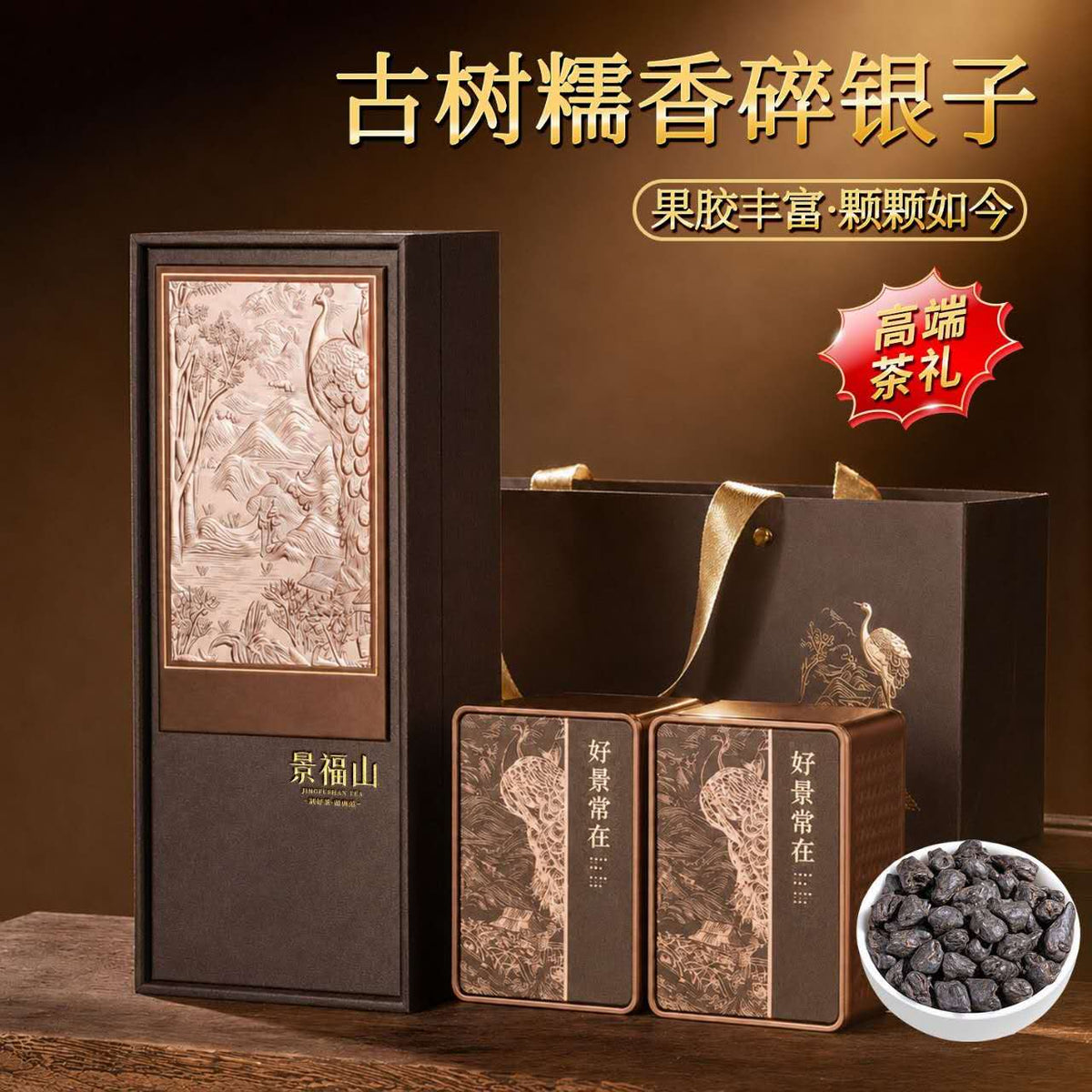
Menghai Ancient-Tree Sui Yin Zi Pu-erh Tea – Nuo Mi Aroma, 1000 g
Ancient-Tree Positioning · Menghai · Tea Fossil · Nuo Mi Aroma
Discover a distinctive expression of Pu-erh with Menghai Ancient-Tree Sui Yin Zi / 碎银子, a compact nugget-style tea created for long, satisfying tea sessions.
This product is presented with a clear identity:
Ancient-Tree Pu-erh / 古树普洱
Sui Yin Zi / 碎银子
Tea Fossil / 茶化石 Style
Menghai · Yunnan / 云南勐海
Nuo Mi Aroma / 糯香
1000 g / 1 kg
The packaging also highlights:
果胶丰富 · Rich in Pectin
and
颗颗如金 · Each Piece Like Gold
These are best treated as part of the product’s stated presentation rather than expanded into health claims.
With a substantial 1 kg format, this tea is designed for customers who already enjoy Pu-erh and want enough for regular home, family or office brewing.
Menghai · Ancient-Tree Positioning · Nuo Mi Aroma · 1000 g

Product at a Glance
Product Name: Menghai Ancient-Tree Sui Yin Zi Pu-erh Tea – Nuo Mi Aroma
Chinese Name: 古树糯香碎银子
Tea Type: Pu-erh Tea
Tea Style: Sui Yin Zi / Cha Hua Shi Style
Chinese Name: 碎银子 / 茶化石
Origin: Menghai · Yunnan · China
Material Positioning: Ancient-Tree / 古树
Aroma Style: Nuo Mi / 糯香
Net Weight: 1000 g / 1 kg
Format: Dense Nugget-Style Pu-erh Tea
Dry Tea Character: Small · Dense · Dark · Nugget-Like
Aroma Direction: Warm · Soft · Rice-Like
Taste Direction: Smooth · Rounded · Rich
Body: Medium to Full
Finish: Smooth · Lingering
Recommended Tea Amount: 5–8 g
Recommended Water: 100–150 mL for Gongfu brewing
Water Temperature: 95–100°C / 203–212°F
Initial Infusion: Approx. 10–20 Seconds
Approx. Brewing Sessions: 125–200
Suitable For: Multiple Infusions
Recommended Teaware:
Gaiwan · Small Teapot · Glass Teapot · Infuser Mug
Best For:
Pu-erh Drinkers · Everyday Tea · Family Tea · Office Tea · Gongfu Brewing · Large Tea Supply


The Tea Changes as You Brew
A dense tea nugget does not release everything at once.
Early Infusions
Gentle · Warm · Beginning to Open
Middle Infusions
Fuller · Smoother · More Aromatic
Later Infusions
Gentle · Rounded · Lingering
The exact progression depends on:
Tea Amount · Water · Temperature · Infusion Time
This changing character is part of the enjoyment.
Same Tea · Many Infusions · Different Moments
Choose Your Brewing Style
Gaiwan
Controlled · Traditional · Exploratory
Ideal for repeated short infusions.
Small Teapot
Warm · Relaxed · Rhythmic
A comfortable everyday Pu-erh brewing method.
Glass Teapot
Visual · Easy · Practical
Watch the liquor deepen.
Infuser Mug
Simple · Office-Friendly · Convenient
Excellent for everyday work tea.
Gaiwan for Discovery · Teapot for Rhythm · Mug for Convenience

1000 g Storage Strategy
For a 1 kg package, use a two-part system.
Main Supply
Keep most of the tea sealed and protected.
Only open it when replenishing your smaller container.
Working Supply
Keep enough for:
One to Several Weeks
in a smaller tea canister.
This helps reduce exposure of the full supply to:
Air · Moisture · Household Odours
Open Less · Handle Less · Keep the Main Supply Protected
Frequently Asked Questions
What is Sui Yin Zi?
Sui Yin Zi / 碎银子 is a dense nugget-style Pu-erh tea whose name literally means “Broken Silver.”
What is Cha Hua Shi?
Cha Hua Shi / 茶化石 means “Tea Fossil” and refers to the tea’s compact pebble-like appearance.
Where is this tea from?
The product is identified as:
Menghai · Yunnan · China
What does 古树 mean?
The packaging presents it as:
Ancient-Tree Positioning / 古树
No specific tree age is confirmed.
What does 糯香 mean?
It means:
Nuo Mi Aroma / Glutinous-Rice-Like Aroma
Does it contain rice?
The product name alone does not establish the ingredient list.
What does 果胶丰富 mean?
The packaging states “Rich in Pectin.” It should be treated as a product statement, not expanded into health claims.
Is this ripe Pu-erh?
Sui Yin Zi / Cha Hua Shi products are commonly associated with ripe-Pu-erh-style production, but the product information supplied here does not explicitly state 熟茶. If your supplier confirms 熟茶, then adding:
Ripe Pu-erh / Shou Pu-erh / 熟茶
would strengthen the listing.
How much tea is included?
1000 g / 1 kg
How many brewing sessions?
Approximately:
125–200 Sessions
depending on whether you use about 8 g or 5 g each time.
Can it be infused multiple times?
Yes.
The compact pieces are particularly suitable for repeated brewing.
What water temperature should I use?
Start around:
95–100°C / 203–212°F
Should it be refrigerated?
Generally, no.
Keep it clean, dry, stable and away from strong odours.
Small Nuggets · Many Tea Moments
Take a few pieces.
Add hot water.
Watch the liquor deepen.
Let the warm Nuo Mi aroma rise.
Take the first sip.
Then brew again.
And again.
One small handful becomes many cups.
One kilogram becomes months of tea moments.
Ancient-Tree Positioning · Menghai · Sui Yin Zi · Nuo Mi Aroma · 1000 g
Bring Eastern Living Home.



Complete Your Tea Ritual


