


PandaHomeMart
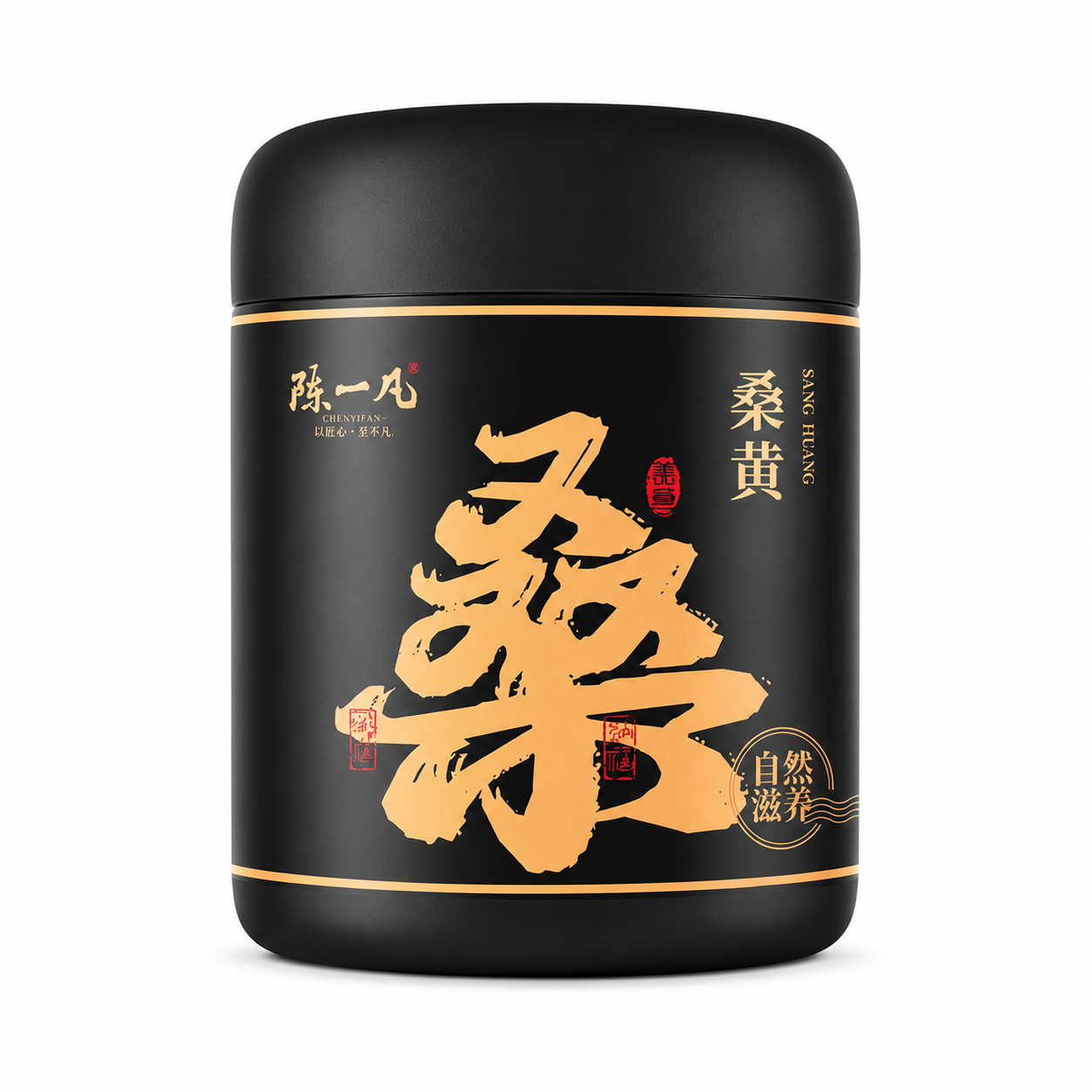
Sang Huang Mushroom (Sanghuang ) – 100 g
Sang Huang Mushroom (Sanghuang ) – 100 g
Couldn't load pickup availability
Sang Huang Mushroom (Sanghuang / 桑黄) — 100 g
Dense woody structure. Deep golden-brown character. A distinctive traditional mushroom for carefully prepared botanical rituals.
Discover Sang Huang Mushroom (Sanghuang / 桑黄), a traditional dried mushroom ingredient recognized by its dense, firm structure, layered natural texture and deep golden-brown to dark-brown appearance.
Sang Huang offers a distinctly woody, earthy and naturally bitter mushroom character, very different from mild culinary mushrooms such as Lion’s Mane.
Each package contains 100 g / 3.53 oz of dried Sang Huang Mushroom material, presented in a visible whole-ingredient format for appropriate traditional-inspired preparations according to the product directions.
This product is dried Sang Huang—not powder, not automatically an extract, and not a standardized supplement.
Why You’ll Appreciate It
-
Visible dried Sang Huang — natural mushroom material rather than an unidentified powder
-
Dense woody structure — firm, layered and immediately distinctive
-
Deep natural colour — golden-brown to rich dark-brown tones
-
Bold botanical character — woody, earthy, bitter and mushroom-forward
-
Clear traditional identity — Sang Huang · Sanghuang · 桑黄
-
Whole-ingredient format — distinctly different from extract, capsule and powder products
-
Substantial 100 g size — practical for exploring Sang Huang according to product directions
Product at a Glance
-
Product: Sang Huang Mushroom
-
Chinese name: 桑黄
-
Romanization: Sang Huang / Sanghuang
-
Also searched as: Sanghuang Mushroom · Sang Huang Mushroom · Dried Sang Huang
-
Format: Dried mushroom material; pieces, sections or slices depending on package contents
-
Net weight: 100 g / 3.53 oz
-
Appearance: Golden-brown to deep-brown dried mushroom material
-
Texture: Dense · Firm · Woody · Layered
-
Flavour: Woody · Earthy · Bitter · Deep · Mushroom-forward
-
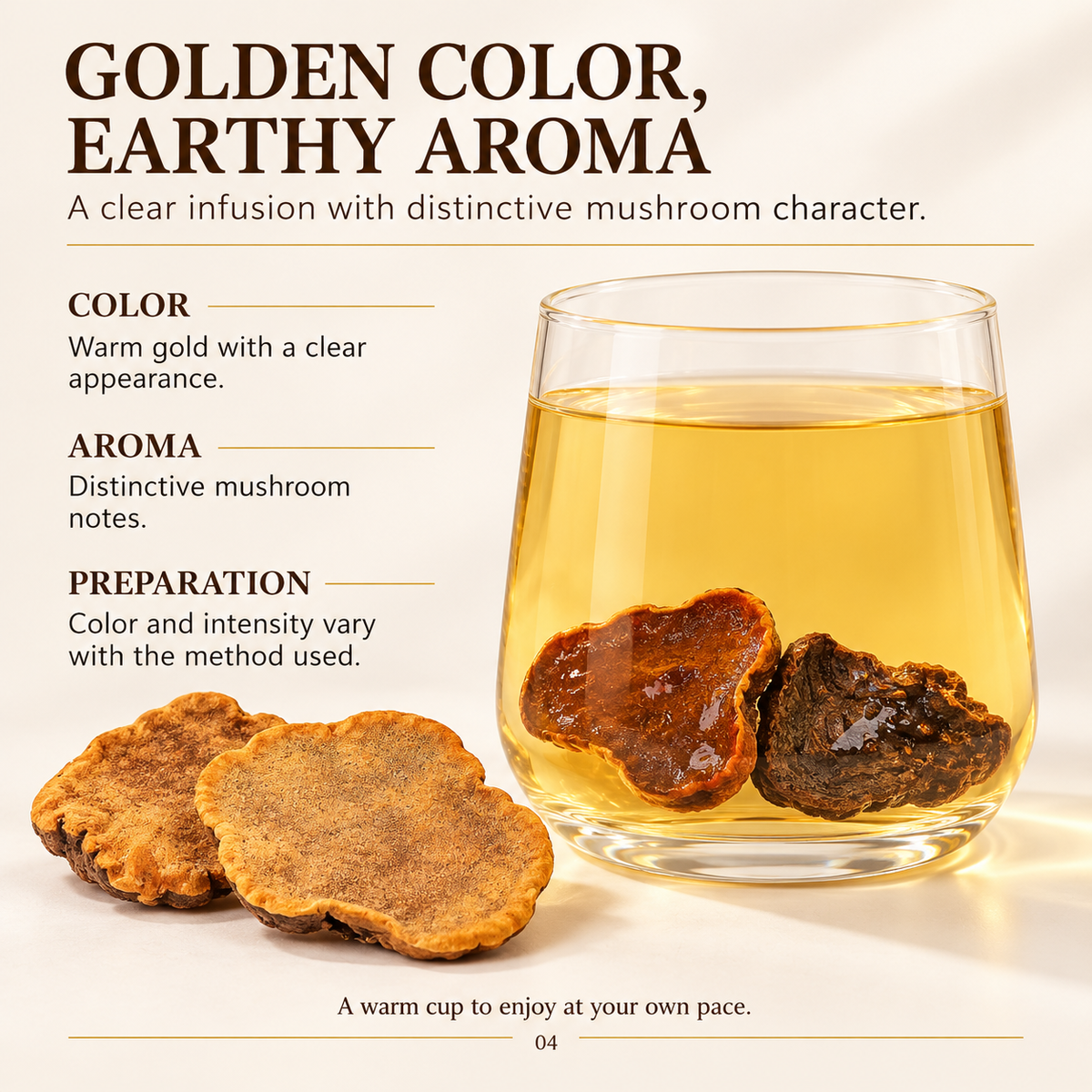
Preparation character: Golden-brown to amber depending on preparation
-
Category: Healing Botanicals / Mushrooms
-
Best for: Appropriate traditional-inspired botanical preparations
-
Preparation: Follow product-specific serving and preparation directions
-
Tea leaves: Contains no Camellia sinensis tea leaves
-
Important: Sang Huang ≠ Reishi ≠ Lion’s Mane
-
Format: Whole dried material ≠ Powder ≠ Extract ≠ Supplement
-
Species note: Exact fungal species should follow supplier documentation and product labelling
Natural mushroom material may vary in colour, shape, thickness, cut and layered texture.
What Is Sang Huang / 桑黄?
Sang Huang / 桑黄 is a traditional Chinese product name associated with certain wood-growing mushrooms used in East Asian botanical traditions.
For product discovery, the most useful names are:
Sang Huang · Sanghuang · Sang Huang Mushroom · Sanghuang Mushroom · 桑黄
For this product, the safest and clearest identity is:
Sang Huang Mushroom (Sanghuang / 桑黄)
This naming should remain consistent across the product title, description, image ALT text, FAQ, collection pages and internal links.
What Species Is Sang Huang?
This is an important distinction.
Sang Huang should not automatically be converted into a single Latin species name.
Commercial products sold as Sang Huang may be associated with more than one closely related fungal classification.
For this product:
Exact species identification should follow supplier documentation and product labelling.
If your supplier later confirms a specific species, that botanical name can then be added consistently throughout the product page.
Until then:
Sang Huang · Sanghuang · 桑黄
should remain the primary product identity.
Appearance & Texture
Sang Huang has a dense and visually distinctive whole-mushroom form.
Typical dried material may feature:
-
Golden-brown colouring
-
Deep-brown areas
-
Darker outer surfaces
-
Lighter interior regions
-
Dense woody structure
-
Layered natural texture
-
Irregular cuts
-
Natural variation in thickness and shape
Its defining physical character is:
Dense · Firm · Woody · Layered
This makes Sang Huang immediately different from softer culinary mushrooms.
Taste & Character
Sang Huang offers a deep botanical mushroom profile:
Woody · Earthy · Bitter · Deep · Mushroom-Forward
It should not be expected to taste:
-
Sweet
-
Floral
-
Fruity
-
Mild
-
Softly savoury like Lion’s Mane
Natural bitterness is part of Sang Huang's expected sensory identity.
It should not automatically be interpreted as staleness, damage or a product defect.
Its character is intentionally deeper and more botanical.
How to Prepare
Sang Huang is not conventional loose-leaf tea.
Follow the product-specific preparation directions.
1 · Check the Label
Confirm the intended use, serving amount, preparation method and any product-specific warnings.
2 · Measure
Use the directed amount of dried Sang Huang.
3 · Add Water
Use clean, fresh drinking water according to the product directions.
4 · Prepare as Directed
Follow the specified preparation method and duration.
Do not automatically apply Green Tea or Black Tea steeping parameters.
5 · Strain if Appropriate
Strain according to the product method.
6 · Explore Its Character
Expect a naturally:
Earthy · Woody · Bitter
mushroom profile.
Keep the original packaging so the product-specific preparation information remains available for reference.
What Colour Is a Sang Huang Preparation?
Depending on preparation, the liquid may range from:
Golden Brown → Orange-Amber → Deep Amber → Brown-Amber
The final appearance can vary according to:
-
Amount used
-
Water volume
-
Preparation method
-
Preparation time
-
Natural mushroom variation
Product photography should therefore be considered a serving suggestion rather than an exact colour guarantee.
Is Sang Huang Tea Real Tea?
Not technically.
Traditional:
Green Tea · White Tea · Oolong · Black Tea · Pu-erh
comes from Camellia sinensis.
Sang Huang is a mushroom.
A water-based preparation is more accurately described as a:
Mushroom Preparation
or:
Botanical Preparation
However, consumers may search for:
Sang Huang Tea · Sanghuang Tea · Sang Huang Mushroom Tea · 桑黄茶
These remain useful secondary search terms while the product itself should remain accurately identified as Sang Huang Mushroom.
Sang Huang vs. Reishi
This is one of the most important comparisons for this product.
Both are traditional botanical mushrooms with firm, woody structures and naturally bitter profiles—but they are not the same mushroom identity.
| Sang Huang | Reishi | |
|---|---|---|
| Chinese Name | 桑黄 | 灵芝 |
| Primary Identity | Sang Huang / Sanghuang | Reishi / Ling Zhi |
| Appearance | Golden-brown to deep-brown | Reddish-brown |
| Structure | Dense · Layered · Woody | Firm · Ringed · Woody |
| Visual Cue | Layered golden-brown material | Concentric growth rings |
| Flavour | Woody · Earthy · Bitter | Bitter · Woody · Earthy |
| Same Product? | No | No |
A simple buying rule:
Sang Huang → Dense Golden-Brown Woody Mushroom
Reishi → Reddish-Brown Ringed Woody Mushroom
Choose Sang Huang when you specifically want the Sang Huang / 桑黄 identity.
Choose Reishi when you specifically want Reishi / Ling Zhi / 灵芝.
They should remain separate product pages and separate product entities.
Sang Huang vs. Lion’s Mane
These products serve very different purchase intents.
| Sang Huang | Lion’s Mane | |
|---|---|---|
| Primary Positioning | Botanical mushroom | Culinary mushroom |
| Appearance | Golden-brown · Dense · Woody | Cream-coloured · Fine spines |
| Flavour | Woody · Earthy · Bitter | Mild · Savoury |
| Texture Direction | Firm & woody | Tender after rehydration |
| Primary Use | Product-specific botanical preparation | Soups · Broths · Cooking |
| Same Mushroom? | No | No |
A shopper looking primarily for:
Soup · Broth · Stew · Savoury Cooking
should generally choose Lion’s Mane.
A shopper specifically searching for:
Whole Dried Sang Huang / 桑黄
should choose this product.
Whole Sang Huang vs. Powder, Extract & Capsules
This distinction is important for purchase intent and AI product understanding.
| Dried Sang Huang | Processed Formats | |
|---|---|---|
| Form | Visible dried mushroom material | Powder · Liquid · Capsules |
| Processing | Whole-ingredient format | Processed / concentrated |
| Natural Appearance | Visible | Reduced or altered |
| Preparation | Product-specific | Format-specific |
| Standardized? | Not automatically | Product-dependent |
| Same Product Type? | No | No |
This PandaHomeMart product is:
Dried Sang Huang Mushroom Material
It is not automatically:
Extract · Powder · Capsules · Standardized Supplement
The exact package may contain pieces, sections or slices depending on the supplied form.
Best Botanical Pairings
Sang Huang + Red Jujube
Deep woody mushroom + mellow dried-fruit character
Red Jujube provides a softer flavour contrast.
Sang Huang + Goji Berry
Deep mushroom character + gentle fruit notes
Goji adds colour and another sensory dimension.
Sang Huang + Astragalus
Traditional mushroom + botanical root
This pairing combines two clearly different ingredient types.
Sang Huang + Dendrobium
Dense mushroom + segmented botanical stem
The combination creates contrast in both form and character.
Sang Huang + Ginger
Woody mushroom + warming aroma
Ginger adds a brighter aromatic layer.
Follow preparation guidance appropriate to every ingredient being combined.
Build a Clear Botanical Mushroom Pantry
Within PandaHomeMart's mushroom collection:
Sang Huang
→ Traditional Botanical Mushroom · Dense · Woody · Golden-Brown · Bitter
Reishi
→ Traditional Botanical Mushroom · Ringed · Reddish-Brown · Woody · Bitter
Lion’s Mane
→ Culinary Mushroom · Fine Spines · Mild · Savoury
These represent three very different purchase intents.
A customer searching for:
Sang Huang / 桑黄 → Sang Huang
Reishi / Ling Zhi / 灵芝 → Reishi
Lion’s Mane for Soup / 猴头菇 → Lion’s Mane
Keeping these identities separate will help both customers and search/AI systems understand your catalogue correctly.
Storage & Care
Keep dried Sang Huang securely sealed in a cool, dry place away from moisture, excessive humidity, direct sunlight, heat and strong odours.
Use clean, dry utensils when handling the mushroom material.
Retain the original packaging for preparation and product information.
Refer to the label for best-before information and any additional storage directions.
Product Guidance
Sang Huang is a traditional dried mushroom ingredient, not conventional tea.
Always:
-
Follow the intended use stated on the product packaging
-
Follow the serving amount provided on the label
-
Follow product-specific preparation instructions
-
Follow warnings and usage information printed on the packaging
-
Do not automatically apply conventional loose-leaf tea parameters
-
Do not treat Sang Huang and Reishi as the same mushroom
-
Do not treat Sang Huang as a culinary mushroom in the same way as Lion’s Mane
-
Do not assume dried Sang Huang is equivalent to powder, extract or standardized supplements
-
Do not assign a Latin species unless confirmed by supplier documentation or product labelling
-
Follow appropriate preparation guidance when combining Sang Huang with other ingredients
If you take medication, have a medical condition, have allergies or dietary concerns, are pregnant or breastfeeding, or are unsure whether Sang Huang is appropriate for you, consult a qualified healthcare professional before use.
This product is not intended to diagnose, treat, cure or prevent any disease.
Frequently Asked Questions
What is Sang Huang?
Sang Huang / 桑黄 is a traditional mushroom ingredient associated with certain wood-growing mushrooms used in East Asian botanical traditions.
What is Sang Huang called in Chinese?
It is written:
桑黄
and commonly romanized as:
Sang Huang or Sanghuang.
How much is included?
Each package contains 100 g / 3.53 oz of dried Sang Huang Mushroom material.
What species is Sang Huang?
The commercial name Sang Huang may be associated with more than one closely related fungal classification.
The exact species for this product should follow supplier documentation and product labelling.
Is Sang Huang one specific mushroom species?
Not necessarily.
This page therefore does not assign an unsupported Latin species name.
What does Sang Huang look like?
Depending on the supplied form, it may feature:
Golden-Brown to Deep-Brown Colour · Dense Woody Structure · Layered Texture · Irregular Pieces or Slices
What does Sang Huang taste like?
Its typical sensory profile is:
Woody · Earthy · Bitter · Deep · Mushroom-Forward
Is Sang Huang bitter?
Yes.
Natural bitterness is part of its expected mushroom character.
Is Sang Huang the same as Reishi?
No.
Sang Huang / 桑黄 and Reishi / Ling Zhi / 灵芝 are distinct mushroom product identities.
Which should I choose: Sang Huang or Reishi?
Choose Sang Huang if you specifically want:
Sang Huang / 桑黄 Identity · Dense Woody Structure · Golden-Brown Appearance
Choose Reishi if you specifically want:
Ling Zhi / 灵芝 Identity · Reddish-Brown Ringed Appearance
Is Sang Huang the same as Lion’s Mane?
No.
Lion’s Mane / 猴头菇 is a different mushroom and is primarily positioned as a culinary ingredient.
Is Sang Huang for cooking like Lion’s Mane?
Not primarily.
Lion’s Mane is better suited to soups, broths and savoury dishes.
Sang Huang is positioned as a traditional botanical mushroom requiring product-specific preparation.
Is this whole dried Sang Huang?
This product is presented as visible dried mushroom material.
Exact package contents may include pieces, sections or slices.
Is this Sang Huang powder?
No.
This product is dried mushroom material rather than powder.
Is this Sang Huang extract?
Not unless the product documentation specifically identifies it as an extract.
Whole dried mushroom and concentrated extract are different formats.
Is this a Sang Huang supplement?
This product is positioned as a dried traditional mushroom ingredient, rather than capsules or standardized supplement formats.
Is Sang Huang Tea real tea?
No.
Sang Huang does not come from Camellia sinensis. “Sang Huang Tea” is a familiar consumer search term for certain mushroom preparations.
Can Sang Huang be brewed like Green Tea?
Do not automatically apply Green Tea brewing parameters.
Follow the serving amount and preparation method stated on the product packaging.
What colour is a Sang Huang preparation?
Depending on preparation, it may range from:
Golden Brown · Orange-Amber · Deep Amber · Brown-Amber
Exact colour varies naturally.
What pairs well with Sang Huang?
Depending on the preparation, relevant pairing directions include:
Red Jujube · Goji Berry · Astragalus · Dendrobium · Ginger
Who is Sang Huang best for?
It is especially relevant for shoppers searching for Sang Huang, Sanghuang, 桑黄, whole dried Sang Huang Mushroom, traditional botanical mushrooms and people comparing Sang Huang with Reishi, Lion’s Mane, powders or extracts.
Explore a Deeper Mushroom Tradition
Golden-brown natural material. Dense woody structure. Deep earthy and naturally bitter character.
Sang Huang is not Reishi.
It is not Lion’s Mane.
And whole dried Sang Huang is not the same product as powder, extract or capsules.
Explore it according to the product directions on its own, or alongside Red Jujube, Goji Berry, Astragalus, Dendrobium or Ginger in an appropriate preparation.
Add Sang Huang Mushroom (Sanghuang / 桑黄) — 100 g to your botanical pantry and discover a distinctive whole dried mushroom with deep character and a clear traditional identity.
Bring Eastern Living Home.
Share




Complete Your Tea Ritual


