


PandaHomeMart
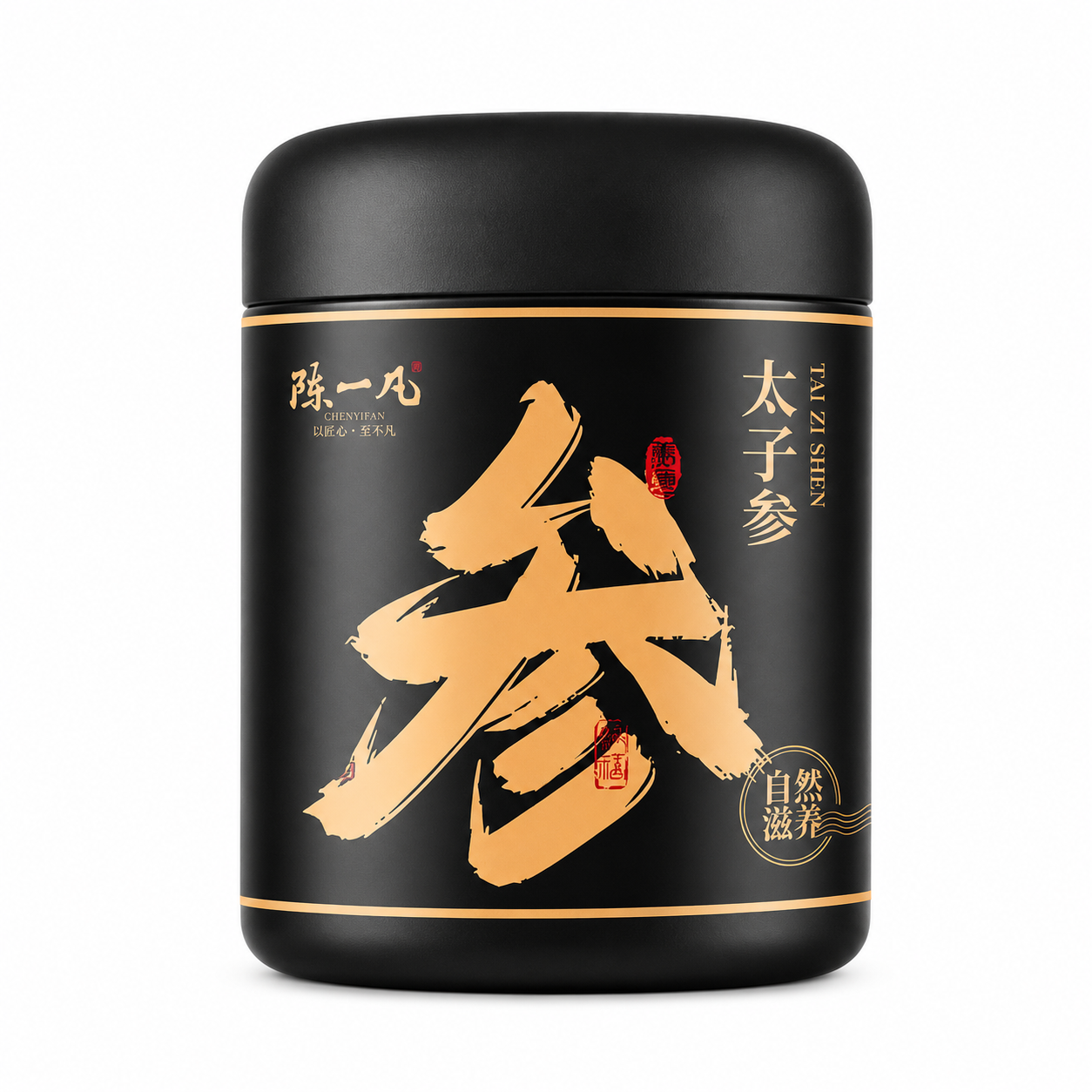
Tai Zi Shen (Pseudostellaria Root) Herbal Tea-250g
Tai Zi Shen (Pseudostellaria Root) Herbal Tea-250g
Couldn't load pickup availability
Pseudostellaria Root (Tai Zi Shen) — 250 g
Pale traditional root. Mild, subtly sweet character. A distinctive ingredient for carefully prepared soups and botanical recipes.
Discover Pseudostellaria Root (Tai Zi Shen / 太子参), a traditional Chinese botanical root generally identified as Pseudostellaria heterophylla.
Presented as pale cream-to-light golden dried roots or root pieces, Tai Zi Shen offers a comparatively gentle sensory profile with mild earthiness and subtle sweetness.
Each package contains 250 g / 8.82 oz of dried Pseudostellaria Root for appropriate traditional-inspired soups, cooked botanical preparations and recipes specifically suited to the ingredient.
Tai Zi Shen is sometimes called Prince Ginseng in English, but this common name can be misleading:
Tai Zi Shen is not true Panax ginseng.
Why You’ll Appreciate It
-
Authentic Tai Zi Shen identity — Pseudostellaria Root / 太子参
-
Clear botanical identification — generally identified as Pseudostellaria heterophylla
-
Gentle root character — mild, subtly sweet, earthy and delicate
-
Visible dried root format — pale slender roots or natural root pieces
-
Soup-friendly ingredient — particularly suited to appropriate traditional-inspired soup preparations
-
Substantial 250 g size — ideal for repeated preparation and botanical pantry exploration
Product at a Glance
-
Product: Pseudostellaria Root
-
Chinese name: 太子参
-
Pinyin: Tai Zi Shen
-
Also known as: Prince Ginseng · Pseudostellaria Root
-
Botanical name: Pseudostellaria heterophylla
-
Plant genus: Pseudostellaria
-
Format: Dried root / root pieces
-
Net weight: 250 g / 8.82 oz
-
Appearance: Pale cream-to-light golden dried roots or root pieces
-
Flavour: Mild · Subtly sweet · Earthy · Delicate · Root-like
-
Category: Traditional Chinese botanical root
-
Best for: Appropriate soups · Cooked botanical preparations · Traditional-inspired recipes
-
Preparation: Follow product-label serving and preparation directions
-
Tea leaves: Contains no Camellia sinensis tea leaves
-
Important: Tai Zi Shen is not a Panax ginseng
Natural dried roots may vary slightly in size, shape, colour and appearance.
What Is Tai Zi Shen / 太子参?
Tai Zi Shen / 太子参 is a traditional Chinese botanical root generally identified as:
Pseudostellaria heterophylla
It is commonly known in English as:
Pseudostellaria Root
and sometimes:
Prince Ginseng
The name “Prince Ginseng” can create confusion because Tai Zi Shen does not belong to the Panax genus.
Its botanical genus is:
Pseudostellaria
rather than:
Panax
For clear product identification:
Tai Zi Shen / 太子参 = Pseudostellaria Root = Pseudostellaria heterophylla
Taste & Character
Tai Zi Shen has a comparatively gentle root profile:
Mild · Subtly Sweet · Earthy · Delicate · Root-Like
It is better characterized by subtle root notes than strong bitterness, sweetness or pungency.
Within a broader botanical-root pantry:
Danshen → Earthy & naturally bitter
Dang Gui → Aromatic & gently bitter
Ginger → Warm, spicy & pungent
Tai Zi Shen → Mild, subtly sweet & delicate
Its gentle character gives Tai Zi Shen a clear sensory identity among stronger traditional roots.
What Does Tai Zi Shen Look Like?
Typical dried Tai Zi Shen may feature:
-
Pale cream-to-light golden colour
-
Slender root form
-
Naturally wrinkled exterior
-
Visible root fibres
-
Slightly tapered ends
-
Irregular natural root pieces
Natural variation in size, shape and colour is expected in a dried agricultural botanical ingredient.
Its pale, slender appearance also helps distinguish Tai Zi Shen from darker or differently shaped roots such as Danshen and Mai Dong.
How to Prepare
Tai Zi Shen is a traditional botanical ingredient rather than conventional loose-leaf tea.
For preparation:
1. Check the Label
Read the serving amount and preparation directions provided on the product packaging.
2. Measure
Use the quantity recommended for this specific product or called for by an appropriate recipe.
3. Prepare
Rinse or otherwise prepare the root according to the package directions.
4. Add Water
Use the water quantity specified by the product directions or recipe.
5. Cook or Prepare as Directed
Follow the recommended preparation method and duration.
Do not automatically apply conventional green-tea, black-tea or herbal-infusion parameters to Tai Zi Shen.
Tai Zi Shen for Traditional-Inspired Soups
One of the clearest culinary contexts for Tai Zi Shen is traditional-inspired soup preparation.
Depending on the recipe, the dried root may be incorporated alongside compatible culinary or botanical ingredients.
Because ingredient combinations and quantities can vary considerably, use:
An Appropriate Recipe + Product-Label Directions
rather than improvising serving amounts.
This gives Tai Zi Shen a practical culinary identity for shoppers looking for:
Tai Zi Shen for Soup · Pseudostellaria Root for Soup · Prince Ginseng Soup Ingredient
without relying on medical or therapeutic claims.
Is Tai Zi Shen a Tea?
Not technically.
Conventional:
Green Tea · White Tea · Black Tea · Oolong · Pu-erh
comes from Camellia sinensis.
Tai Zi Shen is a traditional botanical root.
Although shoppers may search for “Tai Zi Shen Tea,” “Pseudostellaria Tea” or “Prince Ginseng Tea,” the product itself should be accurately identified as dried Pseudostellaria Root.
Follow the product-specific preparation directions rather than standard loose-leaf tea parameters.
Tai Zi Shen vs. Asian Ginseng
Tai Zi Shen and Asian Ginseng are different botanical roots.
| Tai Zi Shen | Asian Ginseng | |
|---|---|---|
| Chinese Name | 太子参 | 人参 |
| Botanical Name | Pseudostellaria heterophylla | Panax ginseng |
| Genus | Pseudostellaria | Panax |
| Ingredient | Root | Root |
| Common English Name | Prince Ginseng | Asian / Korean Ginseng |
| True Panax Ginseng? | No | Yes |
| Same Plant? | No | No |
Despite the common English name “Prince Ginseng,” Tai Zi Shen is not Panax ginseng.
Tai Zi Shen vs. American Ginseng
| Tai Zi Shen | American Ginseng | |
|---|---|---|
| Chinese Name | 太子参 | 西洋参 |
| Botanical Name | Pseudostellaria heterophylla | Panax quinquefolius |
| Genus | Pseudostellaria | Panax |
| True Panax Ginseng? | No | Yes |
| Same Ingredient? | No | No |
The shared use of “ginseng” in English naming does not make these ingredients interchangeable.
Tai Zi Shen vs. Astragalus
Tai Zi Shen should also be distinguished from Astragalus / Huang Qi / 黄芪.
Tai Zi Shen
Pseudostellaria heterophylla · Pale slender root · Mild & delicate
Astragalus / Huang Qi
Astragalus root · Typically pale fibrous slices · Mild traditional root character
Both may belong in a botanical-root collection, but they remain separate product entities.
Tai Zi Shen vs. Mai Dong
Tai Zi Shen and Mai Dong can both have relatively gentle sensory profiles, but they are different ingredients.
| Tai Zi Shen | Mai Dong | |
|---|---|---|
| Chinese Name | 太子参 | 麦冬 |
| Identity | Pseudostellaria heterophylla | Ophiopogon root |
| Form | Pale slender roots / pieces | Small spindle-shaped tubers |
| Appearance | Pale cream to light golden | Pale cream to golden |
| Character | Mild, subtly sweet, earthy | Mild, subtly sweet, delicately botanical |
| Same Ingredient? | No | No |
A useful visual distinction is:
Tai Zi Shen → Pale slender roots / pieces
Mai Dong → Small spindle-shaped tubers
A Gentle Addition to the Botanical Root Pantry
Tai Zi Shen fits naturally alongside:
Astragalus · American Ginseng · Asian Ginseng · Danshen · Dang Gui · Mai Dong · Polygonatum · Ginger
Within a varied root pantry:
Danshen → Rust-red · Bitter · Earthy
Dang Gui → Aromatic · Earthy
Ginger → Golden · Spicy · Pungent
Mai Dong → Pale spindle tubers · Delicate
Tai Zi Shen → Pseudostellaria · Pale root · Mild · Subtly sweet · Soup-oriented
This gives Tai Zi Shen a clear role as the gentler Pseudostellaria root choice for people exploring identifiable traditional Chinese botanical ingredients.
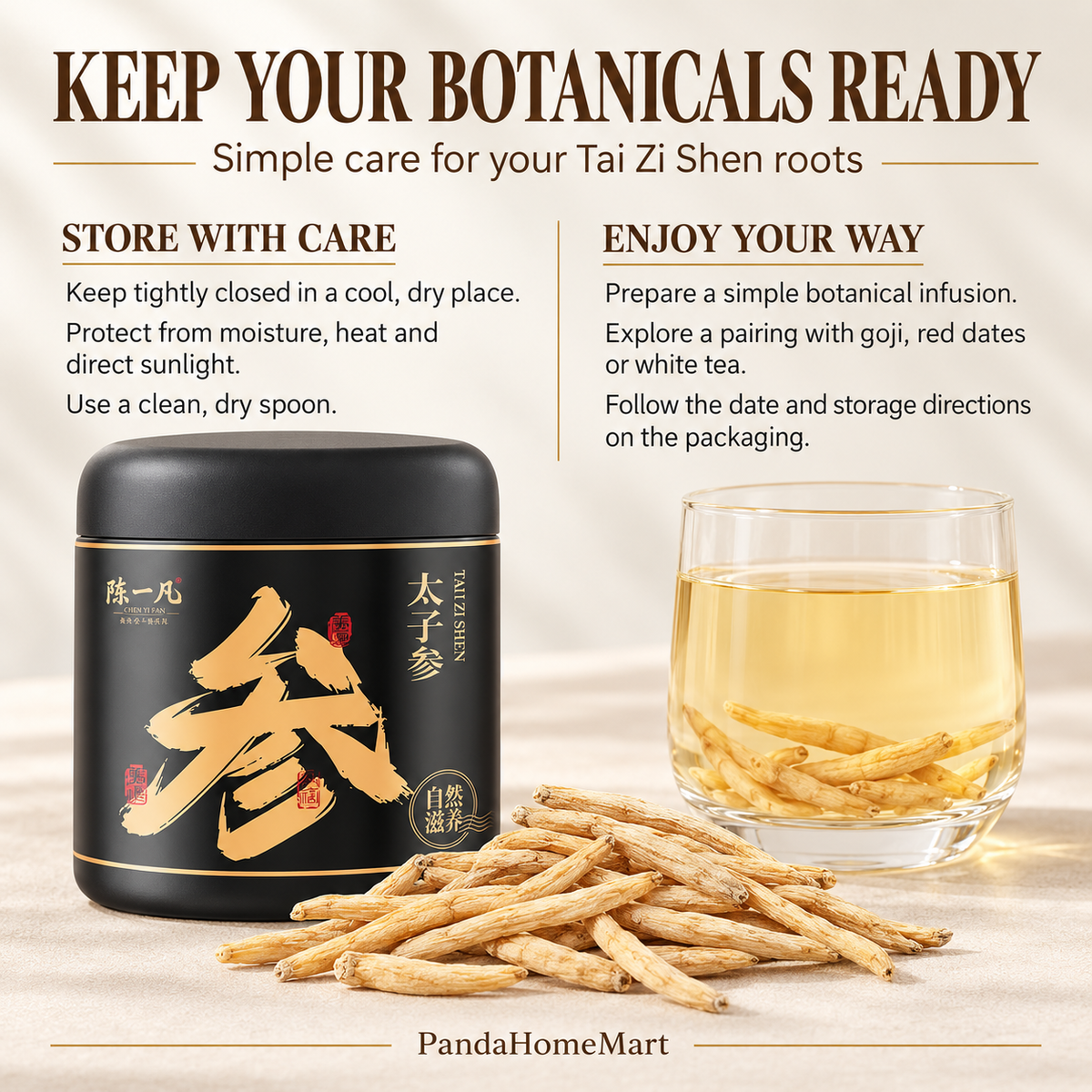
Storage & Care
Keep Tai Zi Shen securely sealed in a cool, dry place away from moisture, excessive humidity, direct sunlight, heat and strong odours.
Use clean, dry utensils when handling the roots.
Refer to the product packaging for best-before information and any additional storage or preparation directions.
Product Guidance
Tai Zi Shen is a traditional botanical ingredient rather than conventional tea or an ordinary snack food.
Always:
-
Follow the serving amount provided on the product label
-
Follow product-specific preparation directions
-
Follow warnings and usage information printed on the packaging
-
Use the exact ingredient called for by the recipe
-
Avoid assuming Tai Zi Shen is interchangeable with other traditional roots
If you take medication, have a medical condition, have allergies or dietary concerns, are pregnant or breastfeeding, or are unsure whether Tai Zi Shen is appropriate for you, consult a qualified healthcare professional before use.
This product is not intended to diagnose, treat, cure or prevent any disease.
Frequently Asked Questions
What is Tai Zi Shen?
Tai Zi Shen / 太子参 is a traditional Chinese botanical root generally identified as Pseudostellaria heterophylla.
Is Tai Zi Shen the same as Pseudostellaria Root?
Yes.
For this product, Tai Zi Shen / 太子参 and Pseudostellaria Root refer to the same root ingredient.
How much is included?
Each package contains 250 g / 8.82 oz of dried Pseudostellaria Root.
Why is Tai Zi Shen called Prince Ginseng?
“Prince Ginseng” is a common English name sometimes used for Tai Zi Shen.
However, Tai Zi Shen belongs to the genus Pseudostellaria rather than Panax.
Is Prince Ginseng real ginseng?
Not in the botanical Panax sense.
Tai Zi Shen / Prince Ginseng ≠ Panax Ginseng.
Is Tai Zi Shen the same as American Ginseng?
No.
Tai Zi Shen is generally identified as Pseudostellaria heterophylla, while American Ginseng is Panax quinquefolius.
Is Tai Zi Shen the same as Asian Ginseng?
No.
Asian Ginseng is Panax ginseng. Tai Zi Shen belongs to a different genus and is a different botanical ingredient.
What does Tai Zi Shen taste like?
It generally has a mild, subtly sweet, earthy, delicate and root-like character.
Is Tai Zi Shen bitter?
It is better characterized as mild and subtly sweet rather than strongly bitter.
Can Tai Zi Shen be used in soup?
Yes, when used according to an appropriate recipe and the product-label directions.
Traditional-inspired soup preparation is one of the clearest culinary uses for this ingredient.
Can Tai Zi Shen be brewed like tea?
Do not automatically use ordinary loose-leaf tea brewing parameters.
Tai Zi Shen is a botanical root, so follow the serving amount, water quantity, preparation method and duration provided on the product packaging or in an appropriate recipe.
Is Tai Zi Shen the same as Mai Dong?
No.
Tai Zi Shen is a Pseudostellaria root, while Mai Dong is an Ophiopogon root-tuber ingredient.
Who is Tai Zi Shen best for?
It is especially suited to people already familiar with traditional Chinese botanical roots, shoppers exploring identifiable root ingredients and home cooks looking for Tai Zi Shen for appropriate soup or cooked botanical recipes.
Discover a Gentler Traditional Root
Pale natural roots. Mild, subtly sweet character. A distinctive Pseudostellaria ingredient.
Explore Tai Zi Shen / 太子参 as the traditional botanical root it is—Pseudostellaria heterophylla, not Panax ginseng.
Use it in appropriate traditional-inspired soups and botanical preparations while following the product-specific serving and preparation directions.
Add Pseudostellaria Root (Tai Zi Shen) — 250 g to your botanical pantry and discover its gentle traditional root character.
Bring Eastern Living Home.
Share




Complete Your Tea Ritual


